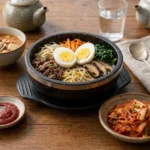
Simple Homemade Kimchi
A traditional, delicious and nutritious Kimchi recipe that adapts beautifully to napa, green, white, or even savoy cabbage.
Servings: 1 Large Jar
Calories: 474kcal
Equipment
- 1 large jar
Ingredients
For the cabbage
- 1 medium head napa cabbage about 1.3kg (or green, white, or savoy cabbage, cut into similar-sized wedges)
- 60 g coarse sea salt plus extra for layering
- 1.5 litres filtered or spring water
For the kimchi paste
- 1 tablespoon glutinous rice flour mixed with 60ml water or 60ml water alone if unavailable
- 1 tablespoon sugar coconut sugar or honey both work well
- 5 to 6 cloves garlic finely grated
- 1 tablespoon fresh ginger finely grated
- 2 to 4 tablespoons gochugaru Korean chili flakes, adjust to taste
- 2 tablespoons fish sauce or soy sauce, tamari, or miso paste for a vegetarian version
- 1 small onion roughly chopped
To finish
- 1 small Korean radish or daikon julienned, about 200g
- 4 spring onions cut into 4cm lengths
- 1 carrot julienned (optional, for colour and sweetness)
Instructions
- Brine the cabbage. Cut the cabbage lengthwise into quarters and remove the core. Cut each quarter crosswise into bite-sized pieces, or leave as whole wedges if you prefer traditional leaf-style kimchi. Dissolve the salt in the water, submerge the cabbage, and weigh it down with a plate. Leave for 2 hours, turning halfway, until the white parts bend without snapping.1 medium head napa cabbage, 60 g coarse sea salt, 1.5 litres filtered or spring water
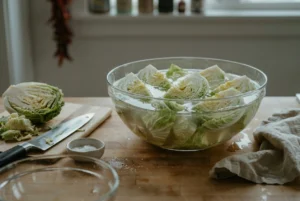
- Rinse and drain. Rinse the cabbage thoroughly under cold water two to three times to remove excess salt. Taste a piece, it should be pleasantly salty, not overwhelming. Drain well in a colander for 15 to 20 minutes.
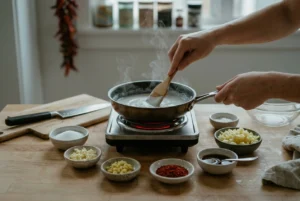
- Make the paste. Heat the rice flour and water in a small pan over low heat, stirring until it thickens into a light paste, then let it cool. Blend the cooled paste with the sugar, garlic, ginger, gochugaru, fish sauce, and onion until smooth.1 tablespoon glutinous rice flour mixed with 60ml water, 1 tablespoon sugar, 5 to 6 cloves garlic, 1 tablespoon fresh ginger, 2 to 4 tablespoons gochugaru, 2 tablespoons fish sauce, 1 small onion
- Combine. In a large bowl, toss the drained cabbage with the radish, spring onions, and carrot. Pour over the paste and, using gloved hands, massage it into every piece until fully and evenly coated.1 small Korean radish or daikon, 4 spring onions, 1 carrot

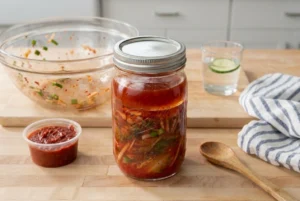
- Pack and ferment. Pack tightly into a clean glass jar, pressing down so the brine rises above the vegetables. Leave 3cm of space at the top. Seal and leave at cool room temperature for 1 to 5 days, pressing down daily to keep everything submerged. Taste from day 1, it is ready whenever it suits you.
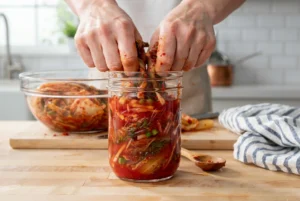
- Store. Once it reaches a tang you love, move the jar to the fridge. It will keep for several months, growing tangier with time.
Notes
Cabbage swap note, napa cabbage is traditional, but green cabbage, white cabbage, and savoy cabbage all ferment beautifully using this exact method. Denser cabbages like green or white may need 30 to 60 minutes longer in the brine.
