How to Plan a Zero-Waste Beach Wedding: 5 Essential Tips
SimplyLila.com articles may contain affiliate links, and the information provided is for educational and informational purposes only. Please read the full disclosure HERE.
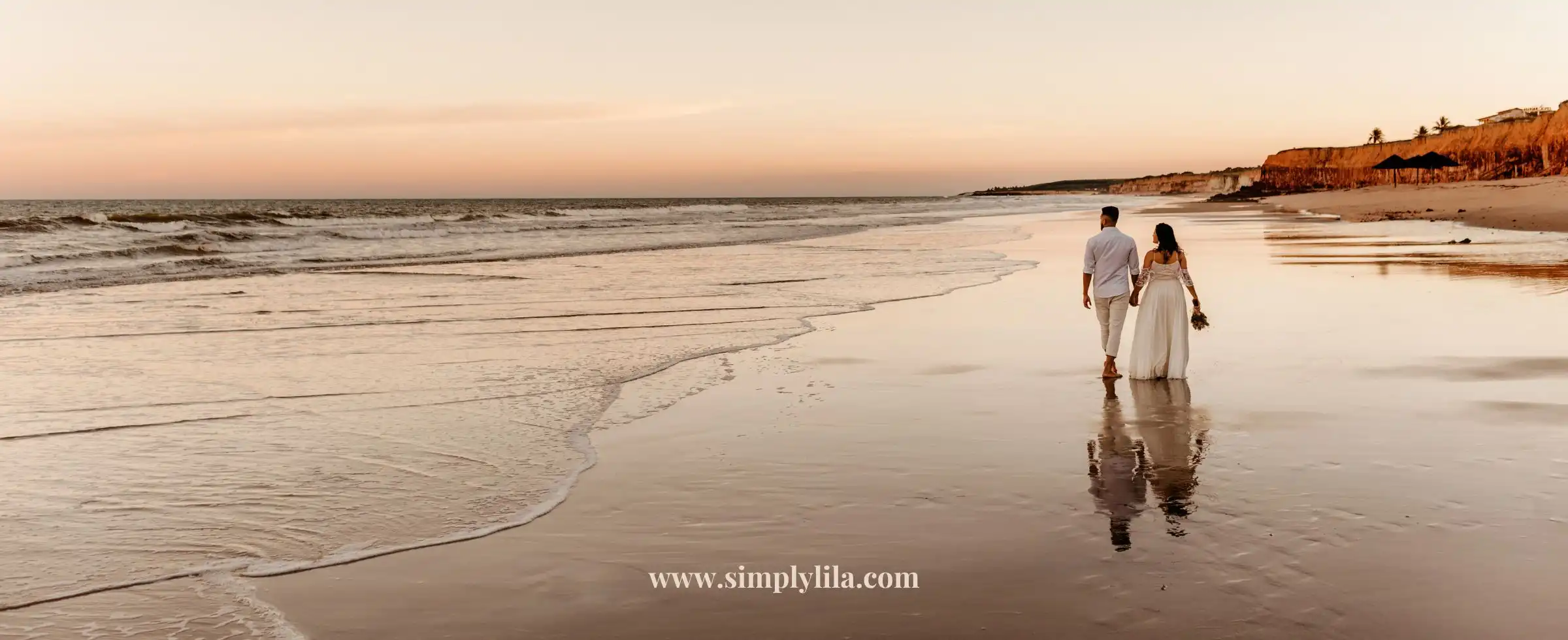
Sand between your toes. Salt air in your hair. Waves as your soundtrack, and the person you love most standing right in front of you.
A beach wedding already feels like the most natural, barefoot-beautiful way to say “I do.” There’s something about the open sky and the shifting tide that puts everything into perspective… which makes it all the more meaningful to celebrate that love in a way that actually protects the place you’re standing in.
Here’s the part that surprises most people: the average wedding produces around 14 kg of waste per guest. Multiply that across even a modest guest list and the number adds up fast, especially when you’re doing it somewhere as precious as a coastline.
The good news is that an eco-friendly beach wedding doesn’t mean stripped-back or boring. Done well, it means more intentional, more personal, and honestly, more beautiful. Here’s exactly how to pull it off.
If you’re already thinking about living more sustainably beyond the big day, my post on 10 simple ways to make your home more eco-friendly is a great place to start.
What Does an Eco-Friendly Beach Wedding Actually Look Like?
Sustainable weddings aren’t about saying no to the things you love. They’re about making smarter choices at each stage of planning, so the day you’ve dreamed about doesn’t cost the earth, literally or figuratively.
The five areas that generate the most waste at a typical beach wedding are invitations and printed materials, décor and florals, food and drink, favors and confetti, and post-event cleanup. Each one has an easy, beautiful alternative. Here they are:
How Do You Start with Eco-Friendly Wedding Invitations?
Go Paperless, or Go Beautiful with Sustainable Paper
Your invitation sets the tone for everything that follows, and it’s also one of the easiest waste swaps to make.
Digital invitations through platforms like Greenvelope or Paperless Post have come a long way. They’re genuinely elegant now, fully customisable, and they eliminate paper waste entirely before the wedding even begins.
However, if you’re a bit old school and love the feel of a physical invitation (and there’s nothing wrong with that), look for 100% post-consumer recycled paper, seed-embedded stock that guests can plant after reading, or FSC-certified handmade lokta paper.
Pair it with compostable envelopes and a wax seal instead of plastic packaging, and you have something that feels and looks super luxurious and leaves almost nothing behind.
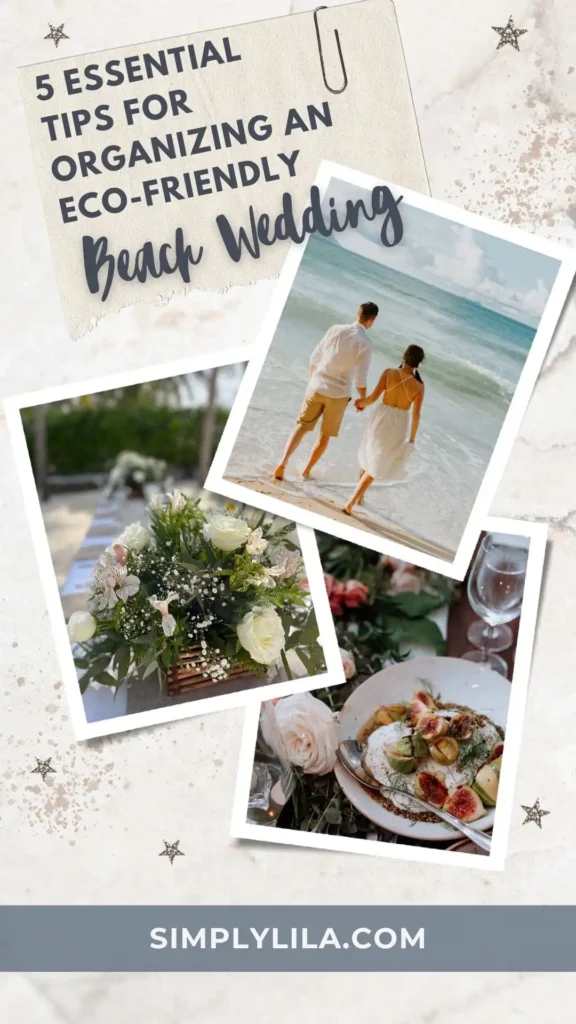
What Are the Best Sustainable Wedding Décor Ideas for a Beach?
Let Nature Do Most of the Decorating
This is where an eco-friendly beach wedding genuinely has the upper hand over a conventional venue. The location itself is already stunning. You don’t need to fight it or smother it.
Driftwood, smooth stones, shells, and dried sea grass gathered locally make for beautiful tablescapes that cost very little and leave nothing harmful behind. Encourage guests to take a piece of your decor home as a keepsake, a small, personal reminder of the day that requires zero packaging.
Potted succulents or native plants in biodegradable pots work brilliantly as centrepieces and double as favors. They’re beautiful on the day and have a life well beyond it, which is the whole point.
If you’re getting married abroad, consider leaving them with venue staff, local helpers, or nearby community members after the celebration.
I spent years running my own wedding business here in Mexico, and I can tell you from experience that the couples who took a moment to acknowledge the people who made their day happen, with something thoughtful, something that didn’t cost the earth but clearly came from the heart, left a lasting impression on everyone involved.
A potted plant or leftover wedding food may be a small thing for you that doesn’t even cross your mind. The feeling it leaves behind with those you touch, is not.
For larger items like tables, arches, chairs, and signage, rent from local event companies wherever possible. Renting saves money, keeps inventory in circulation, and removes the need to transport, store, or dispose of anything after the day.
A note on cut flowers: while they can be insanely beautiful, large floral arrangements die off quickly and are often discarded within days.
If you love fresh florals, choose seasonal and locally grown varieties, or supplement with dried flowers, greenery, and potted plants that have a longer life after the event.
What Should You Serve at a Sustainable Beach Wedding?
A Local, Mostly Plant-Based Menu That Guests Will Actually Talk About
Food is one of the most impactful areas of any event, and it’s also one of the most exciting places to get creative.
Work with your caterer to build a menu around seasonal, regional produce grown within a reasonable distance from your venue.
Skipping air-freighted imports and prioritising local organic farms isn’t just better for the environment, it genuinely tastes better too. Local food, in season, at its peak, is hard to beat.
Plant-forward menus can reduce your event’s carbon footprint by up to 50%, and they don’t have to feel like a compromise.
A vibrant spread of colourful vegetables, grains, legumes, and locally sourced fish or poultry for those who want it can be just as celebratory and just as indulgent as any traditional wedding menu.
Plan ahead for leftovers. Arrange composting for food scraps and connect with a local food-sharing program or shelter to donate untouched dishes at the end of the night after offering to staff if you are able. Knowing the food went somewhere meaningful is a quietly powerful feel-good feeling.
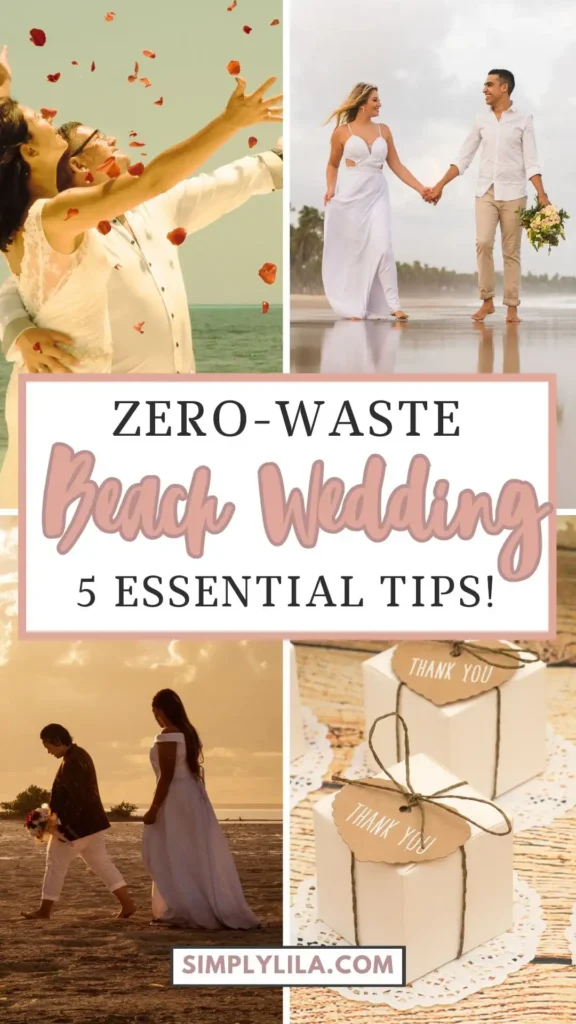
What Are the Best Zero-Waste Wedding Favor and Confetti Ideas?
Give Guests Something They’ll Actually Use and Love
Wedding favors are one of those traditions that, let’s be honest, often end up in the bin by the end of the night. So this is your chance to do something a little different.
Edible favors are always a hit: local honey in small glass jars, handmade chocolates wrapped in compostable cellophane, or homemade spice blends in recycled-glass vials. Anything that gets used and enjoyed rather than stored and forgotten. This also gives you a chance to support local artisans, farmers and families.
For something more lasting, consider bamboo fans (perfect for a beach ceremony in the sun), reusable canvas tote bags personalised with your wedding date, or custom flip flops for a barefoot beach vibe. Practical, personal, and genuinely useful.
As for confetti, please skip the paper, plastic, and rice varieties, all of which cause real harm to beach ecosystems and local wildlife. Real dried flower petals are the gold standard: they’re biodegradable, genuinely beautiful, and they photograph incredibly well.

How Do You Leave a Beach Venue Cleaner Than You Found It?
Organise a Green Clean-Up That Becomes Part of the Memory
This tip doesn’t get talked about enough, and it might be the most quietly meaningful one of all.
Set up clearly labelled waste stations throughout the venue with separate bins for recycling, compost, and landfill. If you can, assign a couple of trusted people to guide guests through sorting, it makes a huge difference to what actually ends up where.
Consider turning your post-reception clean-up into a short community beach sweep. Provide reusable gloves and mesh bags, put on some music, and make it part of the celebration rather than an afterthought.
Guests often respond to this better than you’d expect, especially when it’s framed as a final act of love for the place that held your day.
When choosing your vendors, look for planners, caterers, and rental companies with stated zero-waste or sustainability policies.
Ask whether they use reusable linens, dishware, and flatware. The right vendors will already have systems in place, and working with them makes everything smoother on the day.

Practical Takeaways: Your Eco-Friendly Beach Wedding Checklist
Before you close this tab, here’s a quick summary you can actually act on:
- Send digital invitations or choose seed paper and compostable envelopes
- Use driftwood, local stones, and potted native plants as décor
- Rent tables, arches, and signage from local event companies
- Build your menu around seasonal, locally grown, mostly plant-based food
- Choose edible or reusable favors, and swap plastic confetti for real dried petals
- Set up clearly labelled waste stations at the venue
- Partner only with vendors who have sustainability policies
- Plan a brief post-ceremony beach sweep and make it joyful
The Real Reason This All Matters
You chose a beach because it moved you. Because standing at the edge of the ocean while committing to someone you love feels like the truest version of a beginning you can imagine.
The tips in this post aren’t really about perfection or following a checklist. They’re about making choices that match the values behind the day itself. A love worth celebrating on a shoreline is a love worth protecting the shoreline for.
And honestly? An eco-friendly beach wedding isn’t a compromise. It’s just a wedding that knows exactly what it’s for.
If you want to go deeper on the zero-waste lifestyle beyond the big day, Bea Johnson’s Zero Waste Home is a wonderful place to start, and WRAP’s work on event sustainability is genuinely eye-opening.
Now go plan something beautiful.
Frequently Asked Questions About Eco-Friendly Beach Weddings
Q: Can a zero-waste beach wedding still feel luxurious and beautiful? A: Absolutely. Sustainable choices like potted botanicals, seed paper invitations, locally sourced food, and natural décor often look and feel more considered and personal than conventional alternatives. Eco-friendly doesn’t mean minimal, it means intentional.
Q: What is the most wasteful part of a traditional wedding? A: Food waste and single-use décor tend to generate the most impact. Switching to a local, plant-forward menu with proper composting and donation planning, combined with rented or reusable décor, addresses the majority of a wedding’s environmental footprint.
Q: Is biodegradable confetti really safe for a beach? A: Dried real flower petals are the safest and most genuinely biodegradable option. Many products marketed as “biodegradable confetti” still break down slowly in marine environments or contain dyes that affect local wildlife. Always check before you buy.
Q: How do I find eco-friendly wedding vendors? A: Look for vendors who explicitly mention zero-waste policies, reusable equipment, and local sourcing on their websites. Wedding directories like Green Bride Guide or Eco-Friendly Weddings list vetted sustainable vendors by region. Always ask vendors directly about their waste policies before booking.
Q: Can I have fresh flowers at an eco-friendly wedding? A: Yes, with some adjustments. Choose locally grown, seasonal varieties to avoid the carbon cost of imported flowers. Supplement with dried florals, potted plants, and foraged natural elements. Arrange for bouquets and centrepieces to be donated or composted after the event.
Q: How much waste does the average wedding produce? A: Estimates suggest around 14 kg of waste per guest at a conventional wedding. For a 100-person wedding, that’s approximately 1,400 kg of waste. With intentional planning across food, décor, invitations, and cleanup, that figure can be reduced dramatically.