25 Life-Changing Essential Oil types and How to Use Them Safely
SimplyLila.com articles may contain affiliate links, and the information provided is for educational and informational purposes only. Please read the full disclosure HERE.
The first time I properly used essential oils, I was more than a little sceptical. I’d seen them on shelves for years, assumed they were mostly about making a room smell nice, and didn’t think much more about it.
Then I dropped a couple of diluted drops of lavender onto my pillow before bed during a particularly sleepless stretch, and woke up the next morning genuinely rested for the first time in weeks.
That was the beginning of what became a real and lasting interest in what these highly concentrated plant extracts can actually do.
Essential oils are exactly what the name implies: the concentrated essence of a plant, captured through distillation or cold pressing. They’re not a trend.
Frankincense was traded across ancient trade routes thousands of years ago. Clove has been a staple of traditional medicine for over two millennia. Lavender scented Roman baths.
The history is long, the traditional knowledge is deep, and modern research is increasingly finding reasons to take it seriously.
This guide covers 25 essential oils alphabetically, what each one does, how to use it, its history, and the safety considerations that matter. If you’re new to essential oils, please read the safety primer below before jumping to individual oils.
If you’re already familiar, the profiles are written to give you something useful whether you’re a beginner or someone who’s been building a collection for years.
Before You Start: What You Actually Need to Know About Using Essential Oils Safely
Why Natural Doesn’t Mean Risk-Free
Before we go any further, this is worth saying clearly: essential oils are not diluted herbal teas. They are highly concentrated plant chemistry, and that distinction matters practically.
A single drop of clove essential oil contains the phenolic compounds of a very large quantity of whole cloves. A drop of peppermint oil delivers menthol at a concentration far beyond anything you’d encounter eating the fresh herb.
That concentration is what makes essential oils therapeutically interesting, and it’s exactly what makes careless use a problem.
The compounds that give oils their properties fall into recognisable chemical families, and understanding them briefly makes the safety guidance throughout this post make much more sense than a list of rules.
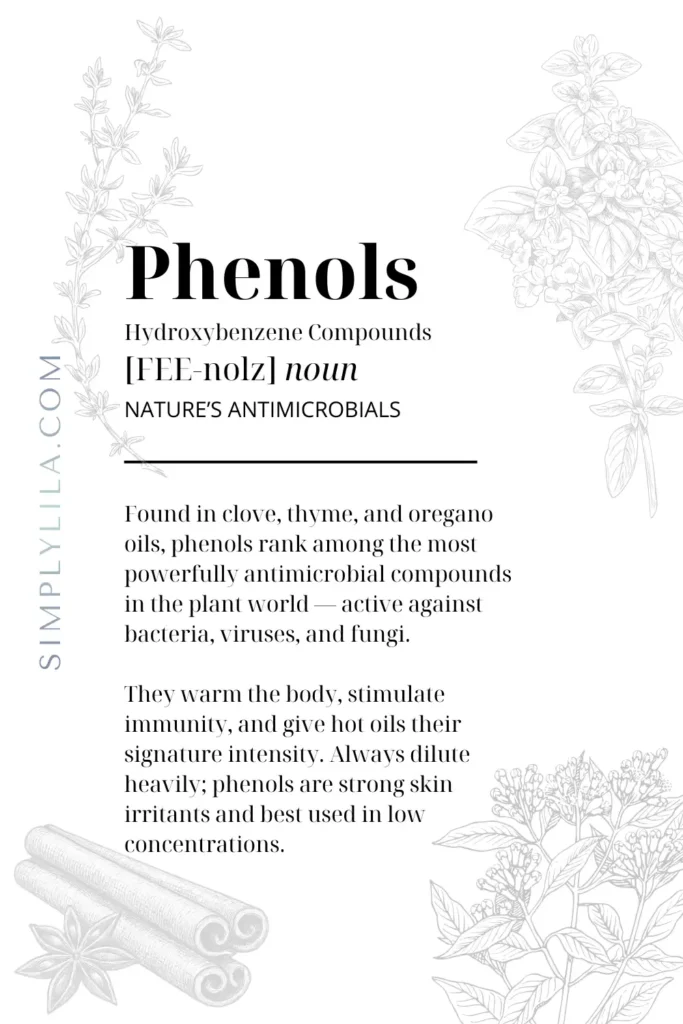
Phenols (found in clove, oregano, thyme ct. thymol, and cinnamon) are the most potent and the most irritating.
They’re strongly antimicrobial and warming, but they cause skin irritation quickly at even moderate concentrations, which is why clove and oregano carry 0.5% dilution limits while most other oils work at 2%.
They should never be used daily on skin and should be avoided on sensitive areas entirely.
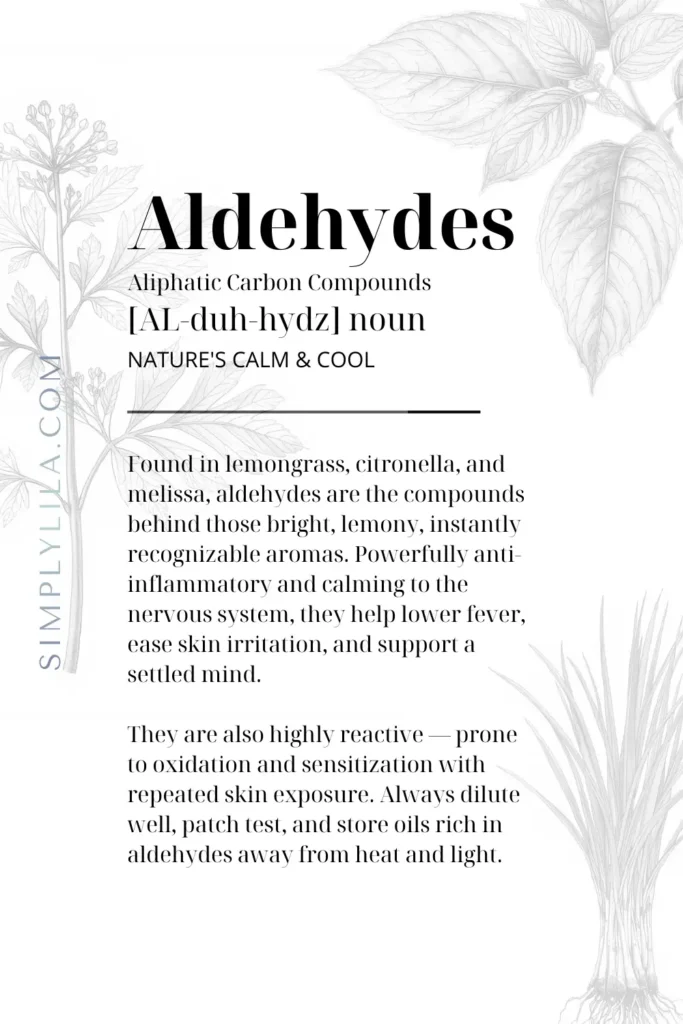
Aldehydes (found in lemongrass, citronella, and melissa) are refreshing and antimicrobial but can cause sensitisation with repeated use at too high a concentration.
The skin can develop a reaction over time even if the first few uses feel fine, which is one reason why patch testing matters even with oils you’ve used before.
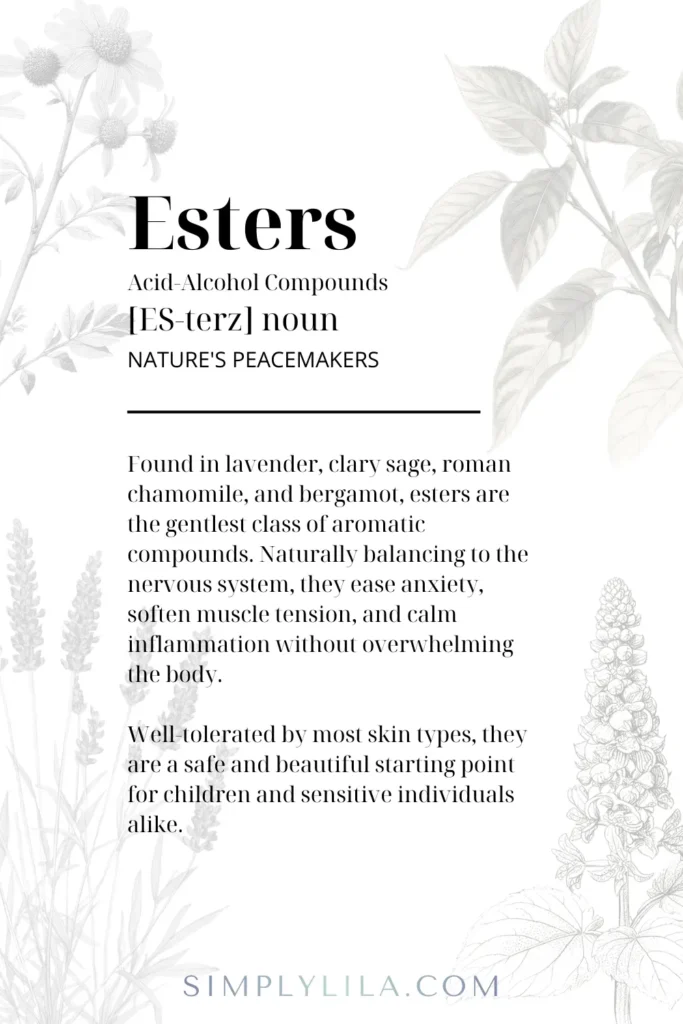
Esters (lavender, clary sage, roman chamomile, bergamot) are typically the gentlest and most calming compounds.
They’re anti-inflammatory, antispasmodic, and the reason these oils are so widely recommended for anxiety, sleep, and sensitive skin.
If you’re nervous about starting with essential oils, ester-dominant oils are your safest entry point.
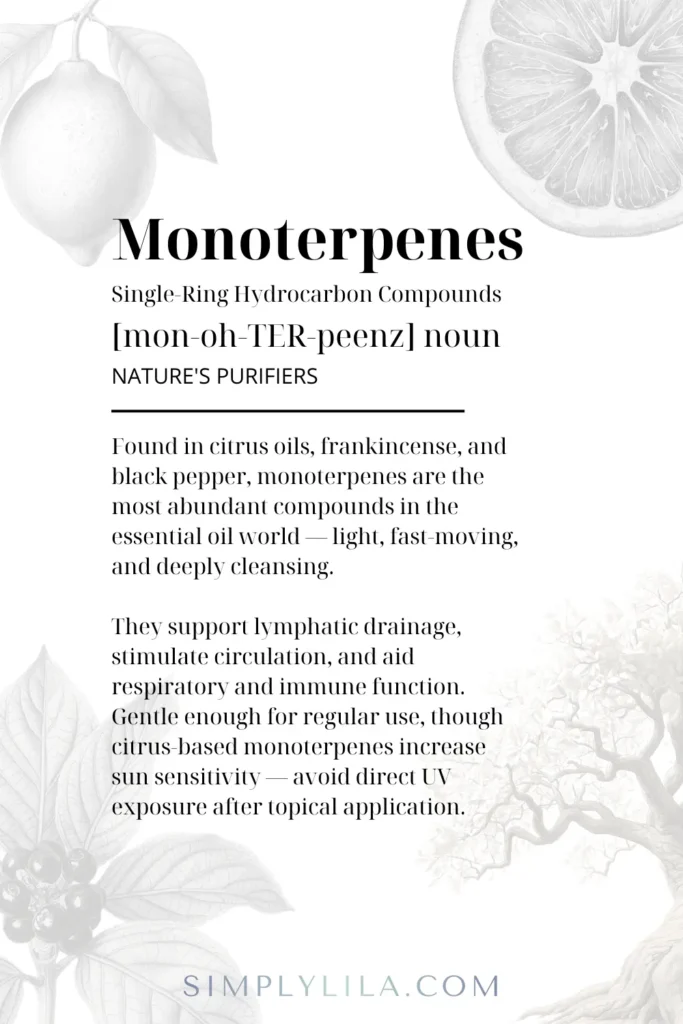
Monoterpenes (citrus oils, frankincense, black pepper) are generally gentle but oxidise quickly when exposed to air, heat, or light, which is why storage matters particularly for citrus oils, more on that in a moment.
None of this is meant to make essential oils sound frightening. It’s meant to make the safety guidance throughout this post make sense rather than feel arbitrary.
The rules have reasons, and understanding those reasons makes you a more confident, not a more cautious, user.
Understanding Oil Potency: A Simple Spectrum
Not all essential oils carry the same level of risk at the same concentrations, and treating them as if they do is one of the most common mistakes beginners make. Here’s a simple grouping to help you self-regulate.
Gentle oils (well-tolerated by most adults at standard dilutions): Lavender, frankincense, sandalwood, cedarwood, geranium, vetiver, neroli, patchouli, cardamom, and ylang ylang.
These are your starting points, your everyday oils, and the ones most suitable for sensitive skin, older children when appropriately diluted, and people new to aromatherapy.

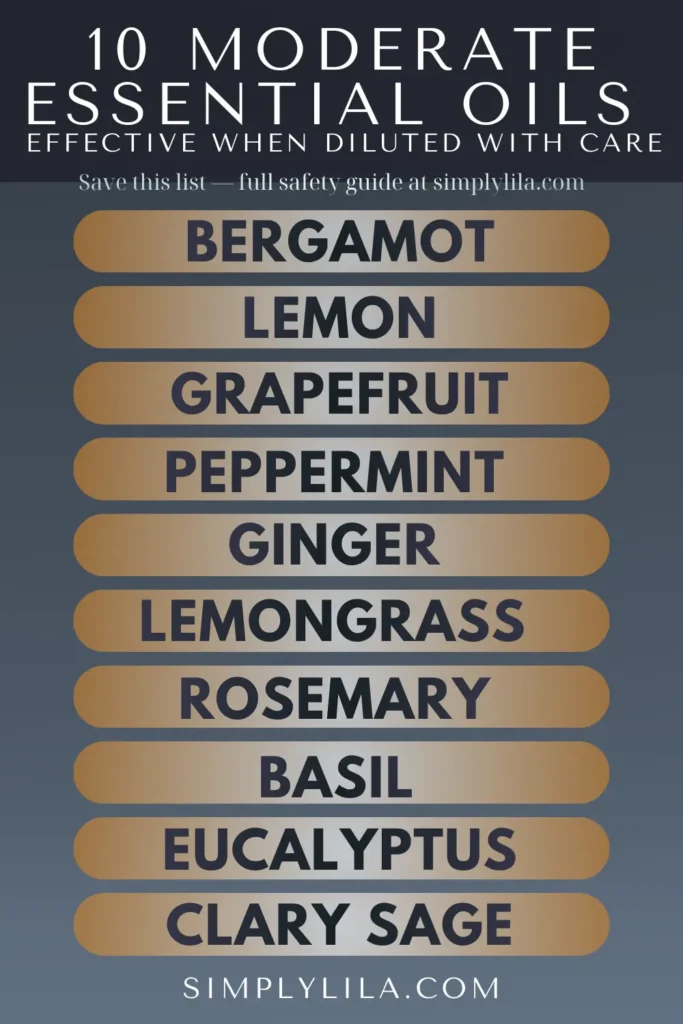
Moderate oils (effective and safe when diluted correctly, but requiring more attention): Bergamot, lemon, grapefruit, peppermint, ginger, lemongrass, rosemary, basil, and eucalyptus.
These oils have specific warnings worth knowing, whether phototoxicity, blood pressure effects, or child safety considerations. They’re not difficult to use, they just require the relevant precaution.
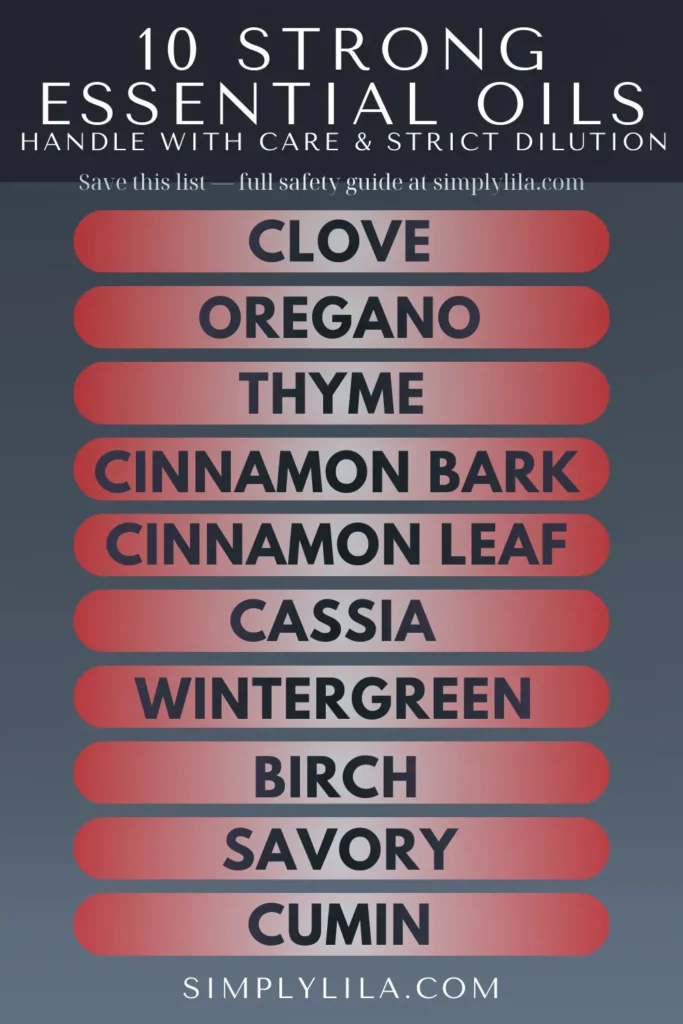
Strong oils (use with care, adhere strictly to dilution limits): Clove, oregano, thyme, and cinnamon bark. These are the phenol-rich oils that cause real skin damage at concentrations other oils handle easily.
The 0.5% dilution limit for clove and oregano is not conservative caution. It’s the actual safe ceiling. These oils are therapeutically powerful and worth having, but they require respect and precision.
The most common misuse patterns worth avoiding, regardless of which category you’re working with: applying oils undiluted because they’re “natural” and therefore assumed to be gentle isn’t the best idea.
Neither is using more drops than recommended because stronger feels like it should be better, or blending four or five oils at once without knowing how they interact.
In fact, using high-potency oils on the same skin area every single day, and assuming that because an oil felt fine the first time, it will always feel fine at higher concentrations can be a terrible mistake long-term. Sensitisation builds over time, not always immediately.
Why Dilution Is Non-Negotiable
Essential oils are highly concentrated. A single drop of peppermint oil, for context, is roughly equivalent to 28 cups of peppermint tea.
Applying undiluted oils directly to skin is one of the most common mistakes people make, and it can cause sensitisation, burns, and reactions that make you unable to tolerate that oil in future, even when properly diluted.
The solution is always a carrier oil. Carrier oils are plain plant-based oils that dilute the essential oil to a safe concentration while also helping it absorb into the skin.
Good carrier oils include jojoba, fractionated coconut oil, sweet almond oil, and grapeseed oil. Each has slightly different properties, but for most people starting out, fractionated coconut oil or jojoba are excellent all-rounders.
Here’s a simple dilution guide to come back to:
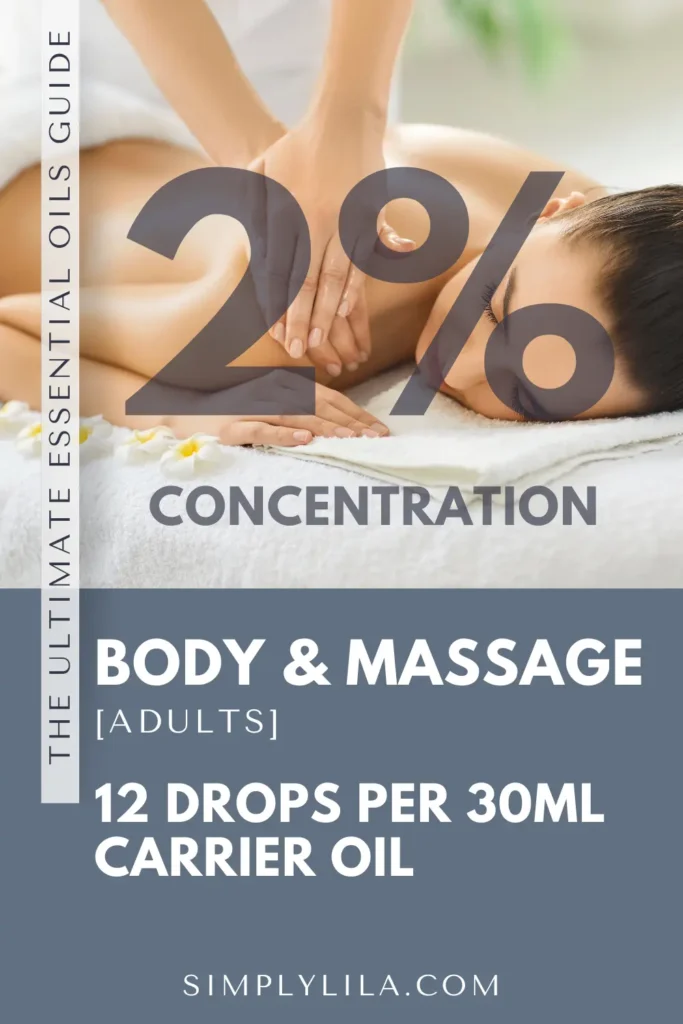
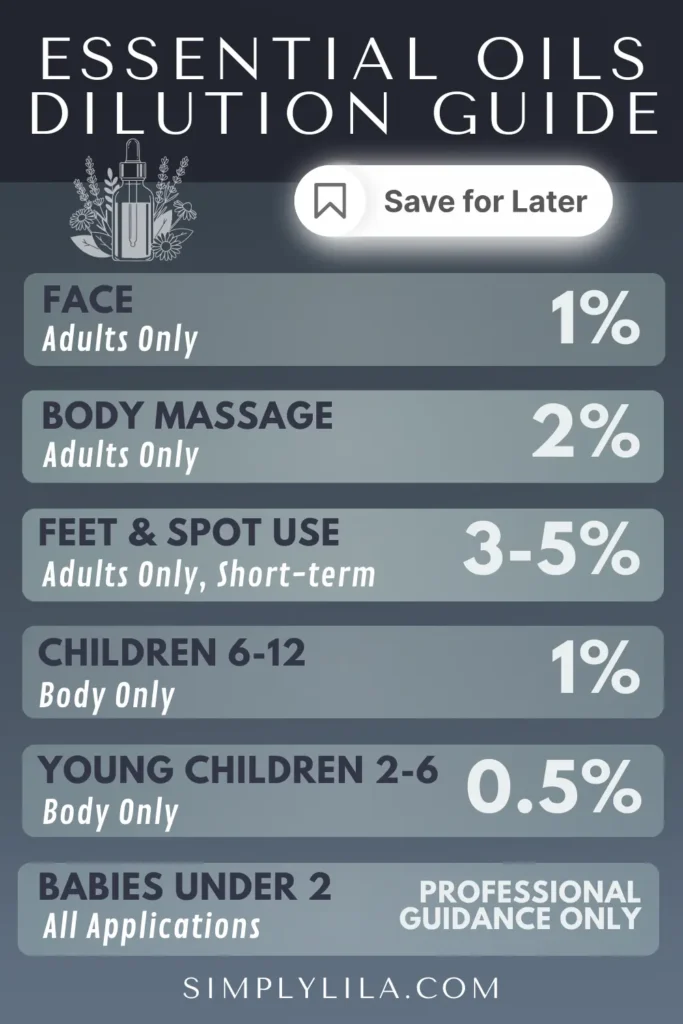
For adults using oils on the body in a general massage or skincare context, 2% is the standard safe dilution. That’s roughly 12 drops of essential oil per 30ml of carrier oil.
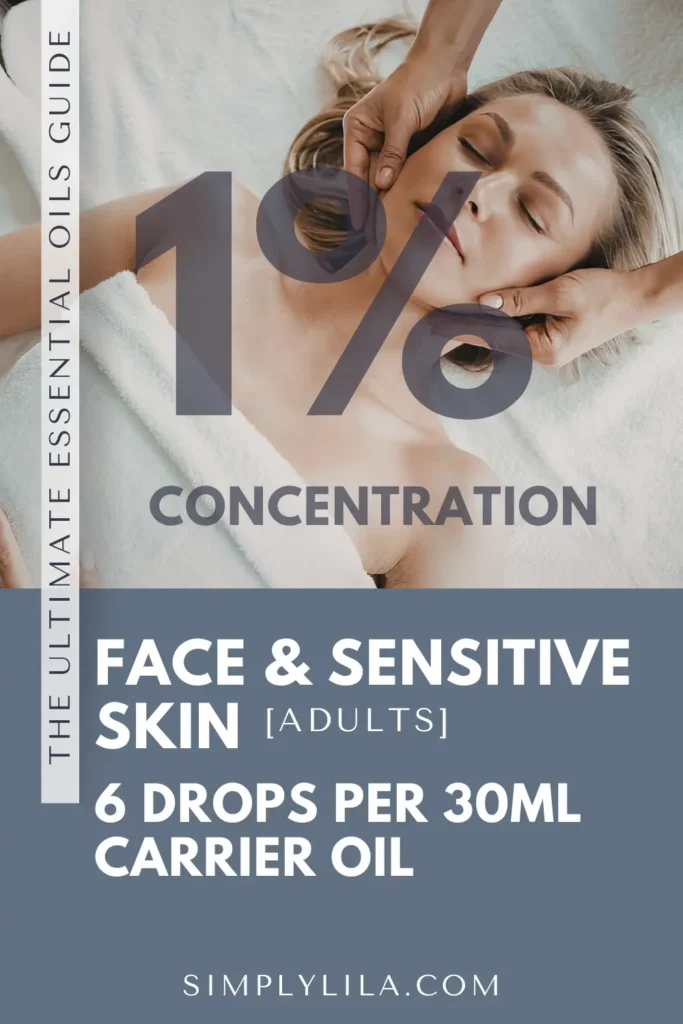
When mixing for use as a facial application, 1% is safer, so around 6 drops per 30ml.
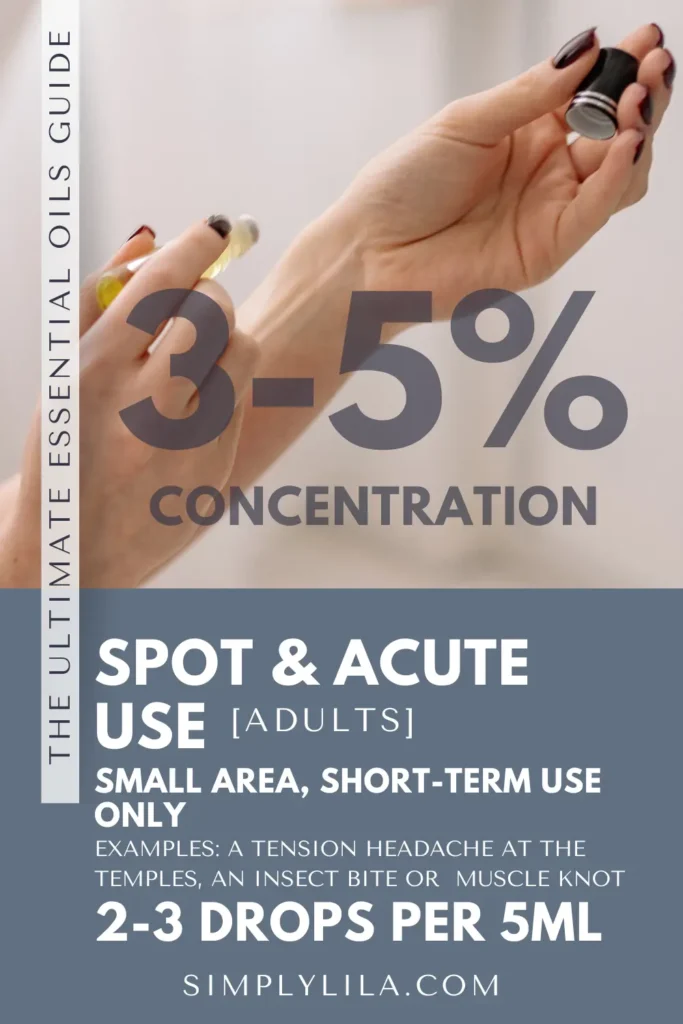
For acute or spot applications, some oils can go up to 3-5%, but this should be the exception, not the default, and specific dilution rates are noted for individual oils throughout this guide.
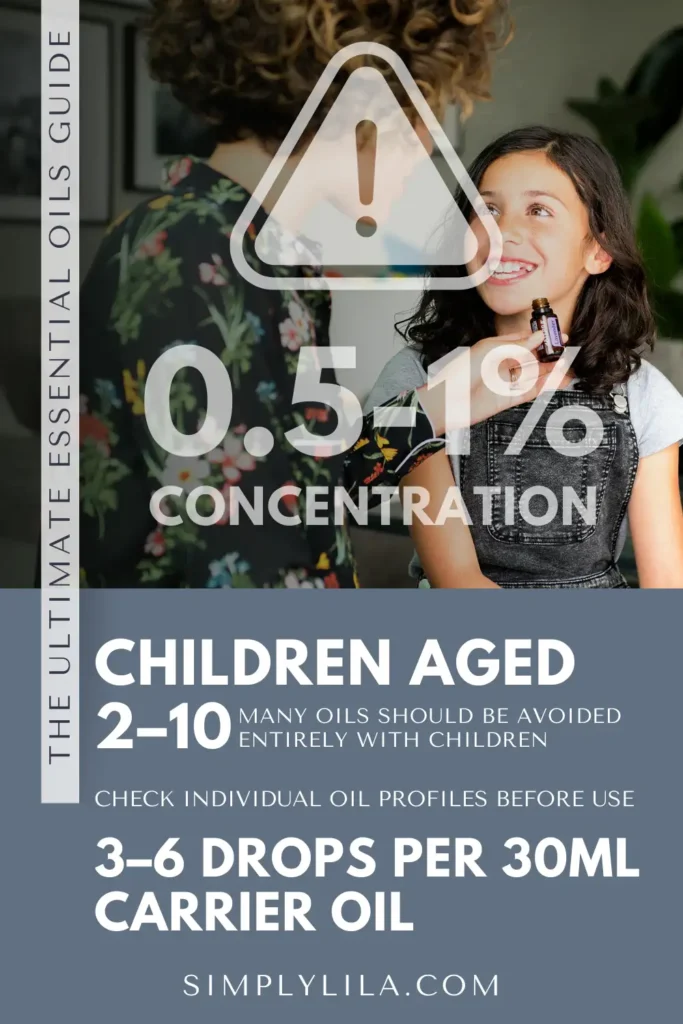
For children aged two to ten, use 0.5 to 1%. Many oils should be avoided with young children entirely, and those exceptions are noted in the individual profiles below.
Always patch-test a diluted oil on a small area of inner arm skin and wait 24 hours before full application, especially if you have sensitive skin or a history of reactions.
Dilution by Body Area, Age, and Context
The 2% dilution figure you’ll see across aromatherapy guidance is a useful baseline, but it’s not the whole picture. Dilution needs vary depending on where you’re applying the oil, who is using it, and how frequently.
By body area:
Facial skin is thinner, more sensitive, and more reactive than body skin. Use 1% for face, which is approximately 6 drops per 30ml of carrier oil. Resist the temptation to go higher even if your skin seems to tolerate it initially.
Body skin, for general massage, moisturising, or muscle rubs, works well at the standard 2%, roughly 12 drops per 30ml carrier oil. For larger body areas like the back or legs, stay at 2%.
Feet have thicker, less reactive skin and can tolerate slightly higher concentrations for specific applications like antifungal treatments or reflexology-based massage. Up to 3 to 5% is generally acceptable for short-term spot use on the feet only.
Mucous membranes, the inside of the nose, mouth, and other sensitive body areas, should never have essential oils applied directly even in diluted form. Steam inhalation is the appropriate delivery method for respiratory use.
By age:
Adults in good general health: 2% body, 1% face, as above.
Older children (six to twelve): 1% maximum, and check individual oil safety profiles carefully. Many oils are appropriate at this dilution for this age group.
Young children (two to six): 0.5 to 1% and only oils confirmed safe for this age group. Lavender, frankincense, and cedarwood are among the better-tolerated options. Eucalyptus, peppermint, clove, oregano, and rosemary should be avoided entirely in this age group.
Under twos and babies: Essential oils should only be used under qualified professional guidance. Many are contraindicated entirely.
By duration of use:
Short-term acute use, such as applying diluted peppermint to temples for a headache or diluted clove to a painful tooth, tolerates slightly higher concentrations for brief periods.
Daily ongoing application to the same skin area is a different matter entirely. Daily application increases sensitisation risk over time, particularly with moderate and strong oils.
If you’re using an oil every day, keep the dilution conservative and consider taking periodic breaks.
A simple reference to return to or save to Pinterest:
A Note on Blending and Oil Interactions
Blending essential oils is one of the genuine pleasures of working with them, and most combinations are perfectly safe. A few principles make blending both safer and more effective.
Phenol-rich oils, clove, oregano, thyme ct. thymol, and cinnamon, should never be combined with each other at their full individual dilution limits.
If you’re making a blend that includes two of these, reduce each one proportionally so the total phenol concentration stays within safe limits. In practice, this means treating any phenol-rich oil in a blend as your limiting ingredient and building everything else around it.
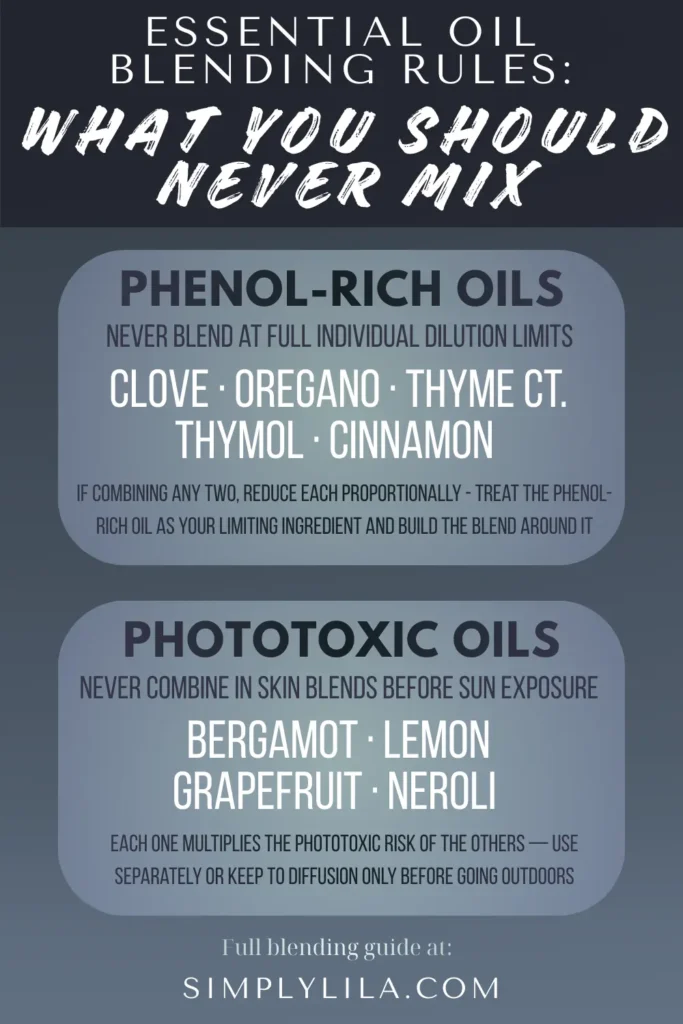
Phototoxic oils, bergamot, lemon, grapefruit, and neroli, should not be combined with each other in topical blends that will be applied to skin exposed to sunlight. Each one multiplies the phototoxic risk of the others.
Beyond these two specific considerations, the main practical guidance on blending is to keep it simple.
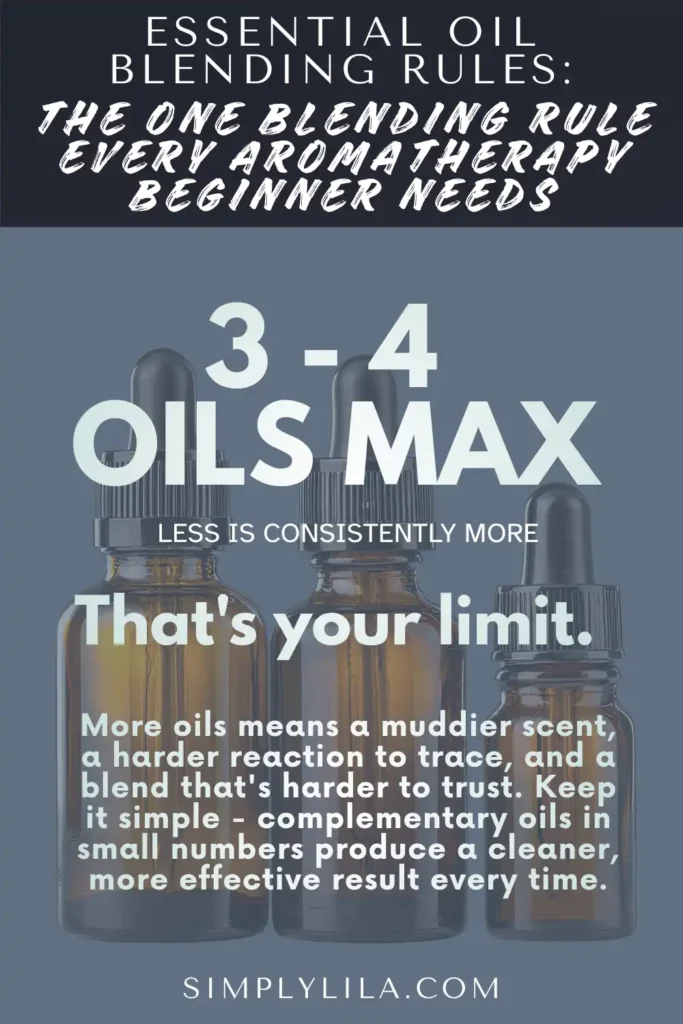
Three or four complementary oils generally produce a cleaner, more effective result than eight or ten. Blending too many oils at once makes it harder to identify what’s working, what’s causing a reaction if one occurs, and tends to produce a scent that is muddier than the sum of its parts. Less is consistently more with essential oil blending.
How to Choose a Quality Essential Oil: What the Label Should Tell You
Essential oil quality varies enormously, and adulteration, the addition of synthetic compounds, carrier oils, or cheaper oils to extend volume, is genuinely common in the market. Poor quality or adulterated oils don’t just underperform therapeutically. They can also cause sensitisation and reactions that a pure oil at the same dilution wouldn’t.
Here’s what to look for on a label:
Botanical Latin name: Every quality essential oil should display the full Latin botanical name, not just the common name. “Lavender oil” could be several different species with meaningfully different properties. Lavandula angustifolia tells you exactly what you’re getting. This is the single most reliable indicator of a serious supplier.
Extraction method: Steam distilled, cold pressed (citrus oils), or CO2 extracted. Avoid anything labelled “fragrance oil” or “perfume oil,” which are synthetic and carry none of the therapeutic properties of genuine essential oils.
Country of origin: Soil, climate, and growing conditions affect the chemical composition of plant-based oils. Where an oil comes from matters, particularly for oils with specific therapeutic reputations tied to regional cultivation, Bulgarian lavender and Moroccan rose being well-known examples.
GC/MS testing: Gas chromatography/mass spectrometry testing analyses the chemical composition of an oil and can identify adulteration, contamination, or batch inconsistencies. Reputable suppliers either provide GC/MS reports or make them available on request. This is the gold standard for purity verification.
Batch numbers and best-before dates: These indicate a supplier who is tracking their product properly. An essential oil without a batch number or any indication of dating is harder to trust for consistency or safety.
The Cliganic, Gya Labs, and Plant Therapy oils linked throughout this post all meet these quality criteria and are brands I recommend with confidence, but regardless of which brand you choose, the label should always give you enough information to verify what you’re buying.
What About Diffusing?
Diffusing disperses essential oil molecules into the air, which is the gentlest and most accessible way to use them. A good quality diffuser, whether a classic ultrasonic table-top model or a waterless app-controlled version for whole-home use, is a worthwhile investment if you plan to use oils regularly.
A few diffusing guidelines worth knowing: diffuse for 30 to 60 minutes at a time rather than continuously, particularly in small or poorly ventilated spaces.
Keep diffusers out of reach of children and pets, as some oils that are safe for adults can be harmful to animals or young children even in diffused form.
Eucalyptus and peppermint in particular should be used very cautiously around young children and cats.
The Key Safety Categories to Know
Several oils in this guide carry specific warnings that will appear repeatedly. I’ve also listed them here in the most important categories for easy reference:
Phototoxic oils (bergamot, grapefruit, lemon, neroli) cause photosensitive reactions when applied to skin exposed to sunlight or UV light. Always apply these at night, to skin that will be covered, or use bergapten-free versions where available.
Pregnancy avoidance applies to a significant number of oils including basil, cedarwood, clary sage, oregano, rosemary, and thyme among others. If you are pregnant, please consult a qualified aromatherapist before using any essential oil therapeutically.
Child safety is particularly important for eucalyptus, peppermint, clove, and oregano, all of which have specific age restrictions noted in their profiles.
Medication interactions are real for several oils. Clary sage and ylang ylang can lower blood pressure. Rosemary can raise it. Dandelion, grapefruit, and several others interact with liver-metabolised medications. If you’re on any regular medication, check with a healthcare provider before using essential oils therapeutically.
Now we’ve covered the basics, here are the 25 oils.
For anyone who enjoys making their own home fragrances with these oils, my post on 4 easy homemade air fresheners for a naturally scented home has some lovely simple recipes that work beautifully with several of the oils listed here.
The 25 Essential Oils: A Complete Beginner’s Guide
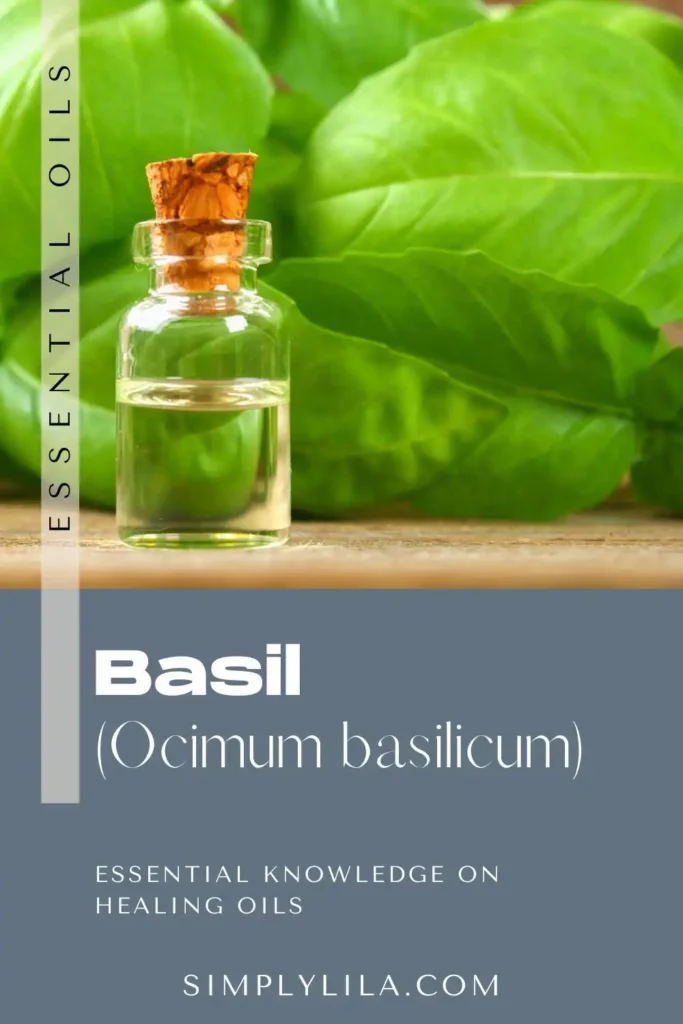
Basil Essential Oil (Ocimum basilicum)
Properties: Energising, antibacterial and anti-inflammatory.
Best Uses: Mental alertness, stress relief and soothing insect bites.
How to Use: Diffuse 2 to 3 drops for mental clarity during focused work. Dilute to 2% in a carrier oil and apply topically for bites and skin irritation.
History: In ancient Indian Ayurvedic tradition, basil was considered a powerful protective plant, used in temples, ceremonies, and medicinal preparations for centuries. Its name comes from the Greek word for king, a nod to the reverence it commanded.
Warnings: Avoid during pregnancy. May irritate sensitive skin, so patch test first.
Buy: Cliganic Organic Basil Essential Oil
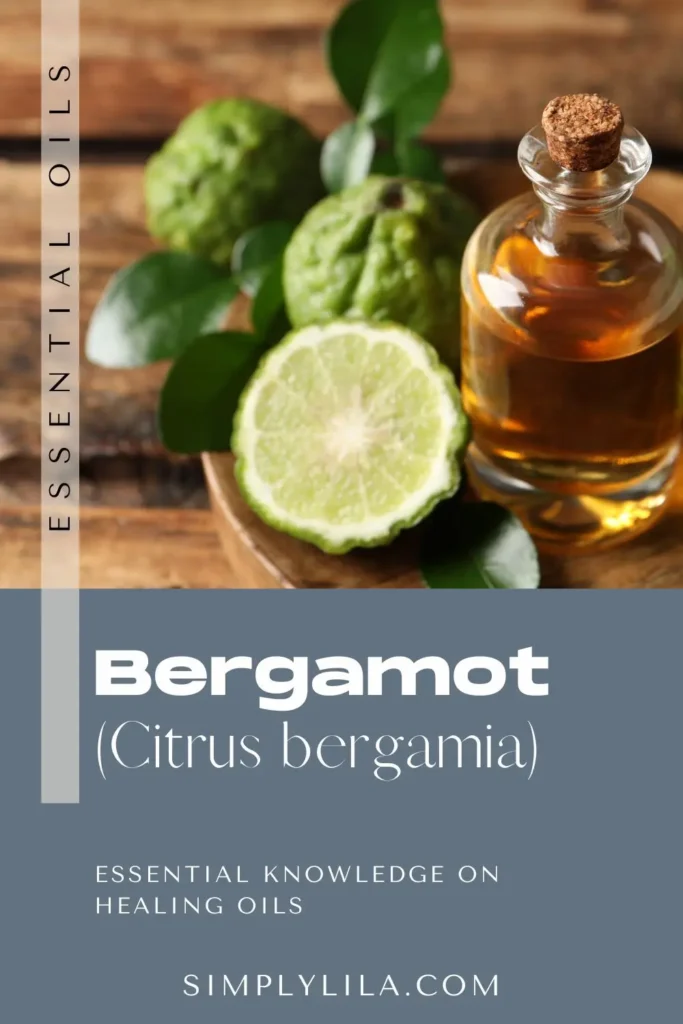
Bergamot Essential Oil (Citrus bergamia)
Properties: Calming, uplifting and antiseptic.
Best Uses: Reducing anxiety, lifting mood and supporting skin health.
How to Use: Diffuse 3 to 4 drops throughout the home for a mood-enhancing atmosphere. Dilute to 1% in a carrier oil for skincare, and only apply to skin that won’t be exposed to sunlight.
History: Bergamot is the result of a natural cross between the citron and bitter orange trees, grown almost exclusively in the Calabria region of southern Italy. It’s been prized for centuries for its distinctive floral-citrus aroma, finding its way into fine perfumes, cosmetics, and as the signature flavour of Earl Grey tea.
Warnings: Phototoxic. Avoid applying to skin that will be exposed to sunlight or UV for at least 12 hours. A bergapten-free version is safer for regular topical use.
Buy: Cliganic Organic Bergamot Essential Oil
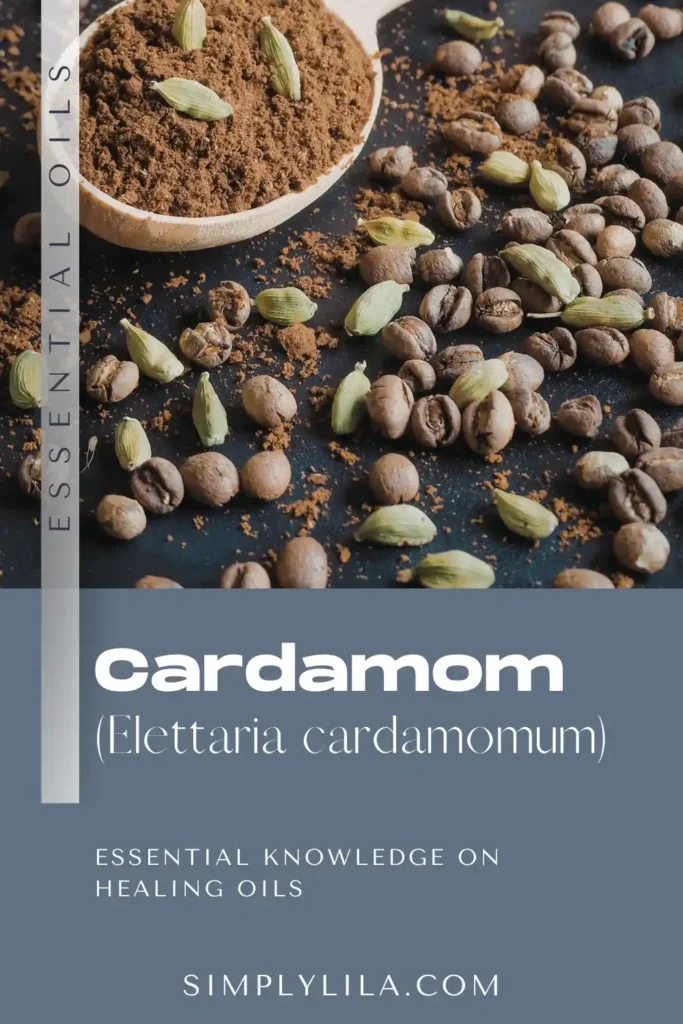
Cardamom Essential Oil (Elettaria cardamomum)
Properties: Warming, digestive-supportive and gently uplifting.
Best Uses: Easing occasional digestive discomfort, supporting clear breathing and creating a calm yet energised atmosphere.
How to Use: Diffuse 2 to 3 drops to enjoy its warm, spicy-sweet aroma. Dilute in a carrier oil and massage gently onto the abdomen during digestive discomfort. Alternatively, add it to steam inhalation blends for respiratory support.
History: Cultures across India, the Middle East, and parts of Africa have valued cardamom for thousands of years. Ayurvedic practitioners used it to support digestion and balance internal systems. The spice travelled ancient trade routes as one of the world’s most prized aromatic plants, and the essential oil captures the same warm, sweet, slightly citrusy fragrance that makes cardamom such a beloved culinary spice to this day.
Warnings: Always dilute before skin application. Avoid contact with eyes and sensitive areas. Consult a qualified professional before any internal use.
Buy: Cliganic Organic Cardamom Essential Oil

Cedarwood Essential Oil (Cedrus atlantica)
Properties: Grounding, antiseptic and anti-inflammatory.
Best Uses: Promoting restful sleep, supporting scalp health and easing anxiety.
How to Use: Dilute 2% in a carrier oil such as jojoba or grapeseed and massage into the scalp. Leave overnight or rinse after 15 to 20 minutes. Alternatively, diffuse 3 to 4 drops in the bedroom before sleep for a deeply grounding night scent.
History: Cedarwood was one of the most prized materials of the ancient world. The Egyptians used cedar resin in the embalming process and in cosmetics. In fact, Ancient Near Eastern cultures valued cedar forests so highly that historical texts repeatedly cite them as symbols of permanence and strength.
Warnings: Avoid during pregnancy.
Buy: Cliganic Organic Cedarwood Essential Oil
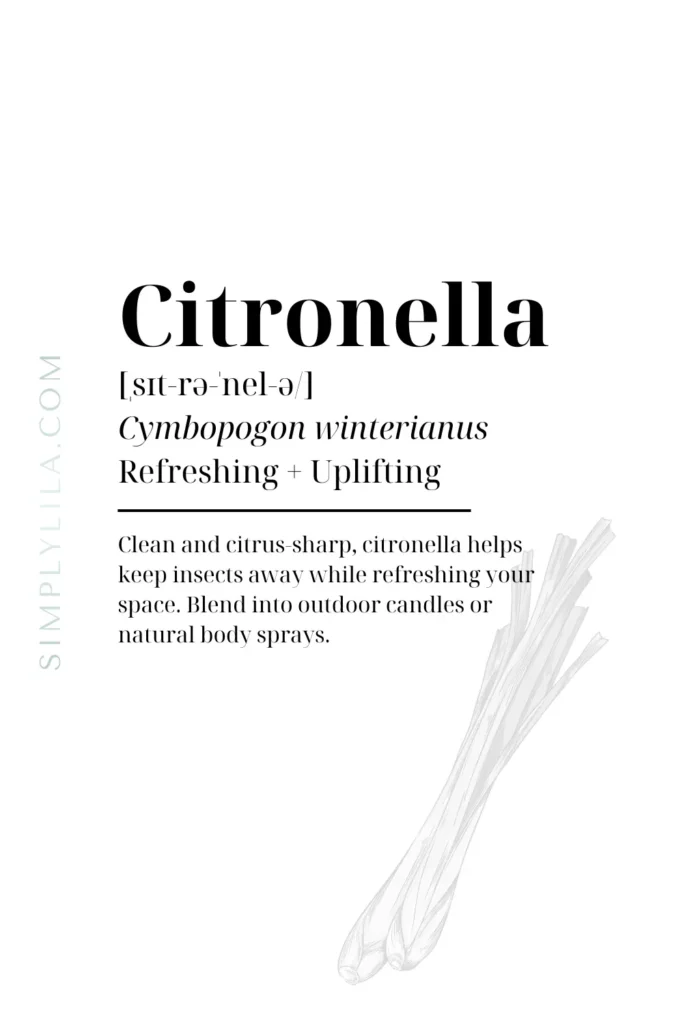
Citronella Essential Oil (Cymbopogon nardus / Cymbopogon winterianus)
Properties: Refreshing, cleansing and naturally insect-repelling.
Best Uses: Keeping mosquitoes and insects away, freshening indoor and outdoor spaces.
How to Use: Diffuse 3 to 4 drops in outdoor areas such as patios or gardens during warm evenings to help deter insects. Dilute in a carrier oil and apply lightly to exposed skin before spending time outdoors. Alternatively, blend it into a natural insect-repelling spray.
History: Citronella comes from a type of aromatic grass native to Southeast Asia, used for centuries in traditional herbal practices and natural household remedies long before commercial insect repellents existed. Its strong citrus-like scent made it particularly valued for deterring insects, and today it remains one of the most widely recognised plant-based oils used in candles, sprays, and outdoor blends worldwide.
Warnings: Always dilute before topical use. Avoid contact with eyes and sensitive areas. Discontinue if skin irritation occurs.
Buy: Cliganic Organic Citronella Essential Oil
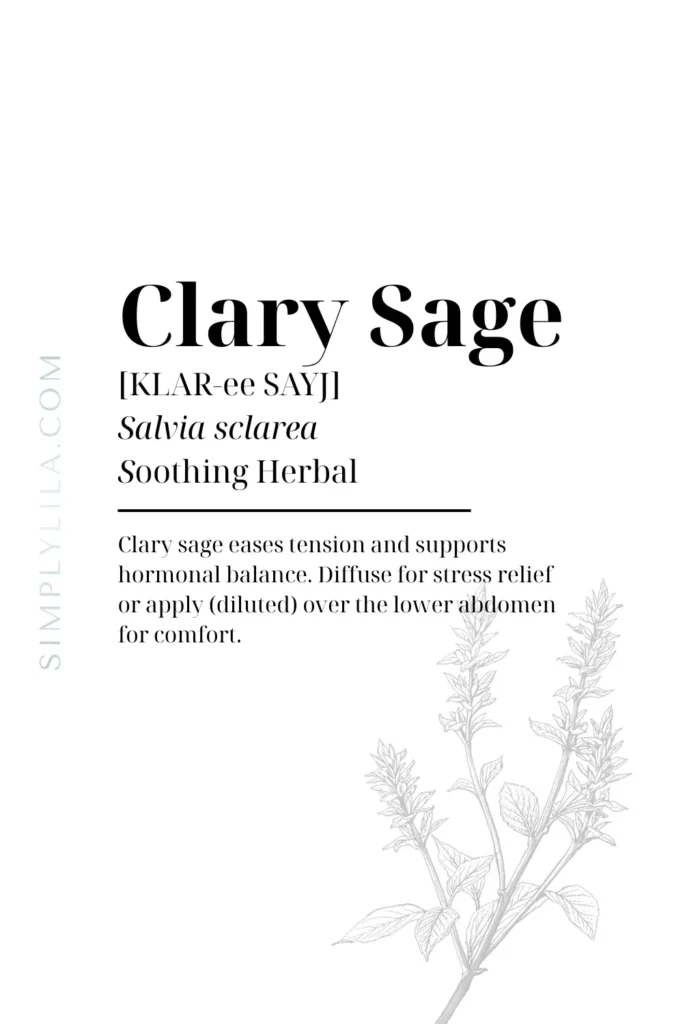
Clary Sage Essential Oil (Salvia sclarea)
Properties: Calming, hormone-balancing and mildly antiseptic.
Best Uses: Easing menstrual cramps, reducing menopausal symptoms and relieving stress. A genuinely useful one for women at every stage.
How to Use: Diffuse 3 to 4 drops for relaxation and nervous system support. Diluted to 1 to 2% in a carrier oil, massage onto the lower abdomen during painful menstrual symptoms for gentle relief.
History: The ancient Greeks valued clary sage for its soothing effect on the nervous system and what they called “female ailments,” a term that captures something genuinely real about this plant’s affinity with hormonal health. European herbal traditions have continued to use it for exactly these purposes for centuries.
Warnings: May lower blood pressure. Avoid if you have hypotension. Do not use during pregnancy without professional guidance.
Buy: Cliganic Organic Clary Sage Essential Oil
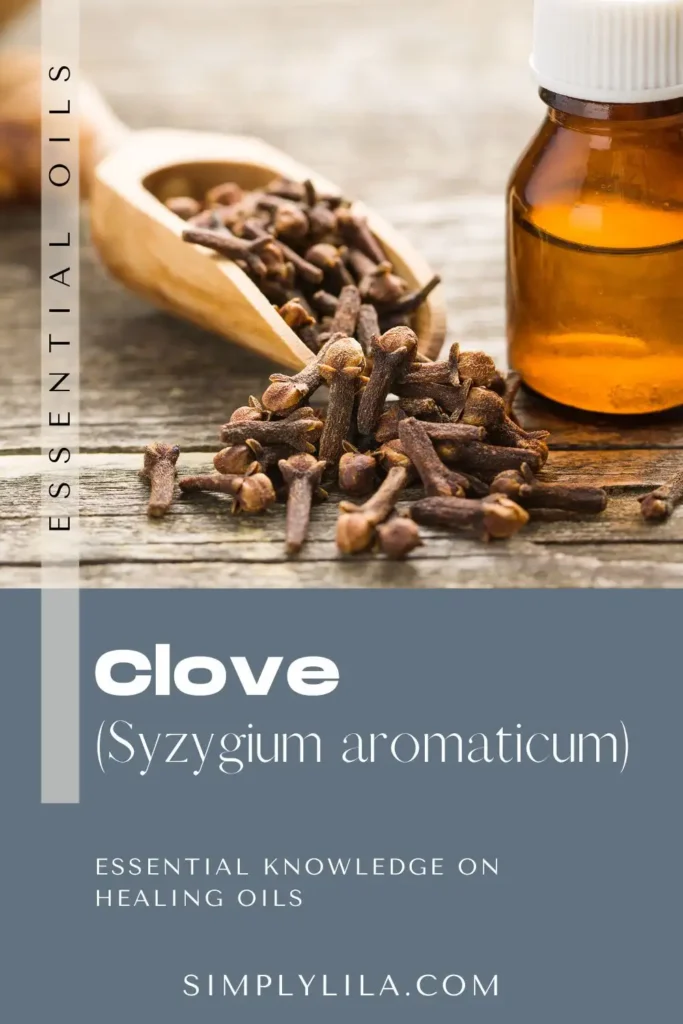
Clove Essential Oil (Syzygium aromaticum)
Properties: Analgesic, anti-inflammatory and strongly antimicrobial.
Best Uses: Numbing toothache pain temporarily, supporting respiratory health during congestion, and natural food preservation.
How to Use: Dilute to 0.5% in carrier oil (this is genuinely important with clove, which is very potent) and apply sparingly to the gums for mild temporary pain relief. For respiratory congestion, add 2 drops to a bowl of hot water, allow to cool slightly, and inhale the steam.
History: Cloves have been a staple of traditional Chinese and Ayurvedic medicine for over 2,000 years, valued for their analgesic and antimicrobial properties. Medieval European physicians used clove extensively, and it was among the most traded spices in the ancient world, so valuable that it contributed to centuries of global trade rivalry.
Warnings: Extremely potent and potentially caustic. Never exceed 0.5% dilution on skin. Avoid on children under two. Can irritate skin and mucous membranes.
Buy: Cliganic Organic Clove Essential Oil
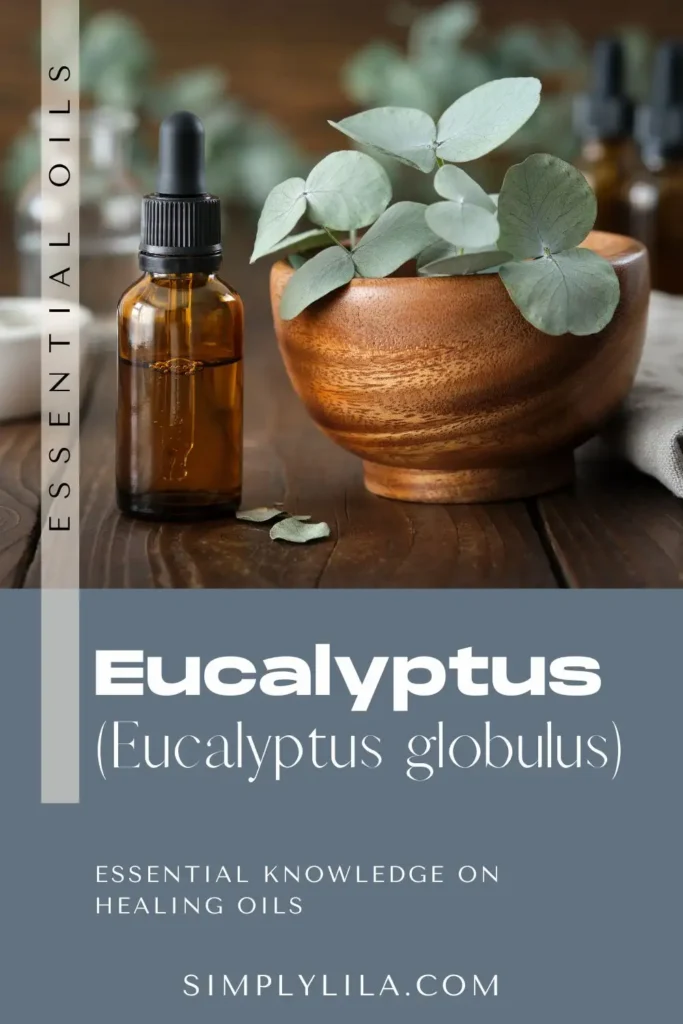
Eucalyptus Essential Oil (Eucalyptus globulus)
Properties: Decongestant, anti-inflammatory and powerfully antiseptic.
Best Uses: Clearing sinuses and supporting respiratory health, soothing sore muscles, and natural insect repelling.
How to Use: Add 3 to 5 drops to a diffuser for respiratory support during colds and congestion. Diluted to 2 to 3% in a carrier oil, it makes an effective muscle rub for post-exercise soreness or tension.
History: Aboriginal Australians used crushed eucalyptus leaves in wound poultices and for cough relief long before European settlement. Colonial-era physicians later used the essential oil for respiratory conditions and wound treatment. Today it remains one of the most widely used therapeutic essential oils globally.
Warnings: Neurotoxic if ingested. Keep away from young children and never apply near the face of children under ten. Use with caution or avoid entirely if you have asthma, and check with a medical professional first. Toxic to cats and dogs even via diffusion.
Buy: Cliganic Organic Eucalyptus Essential Oil
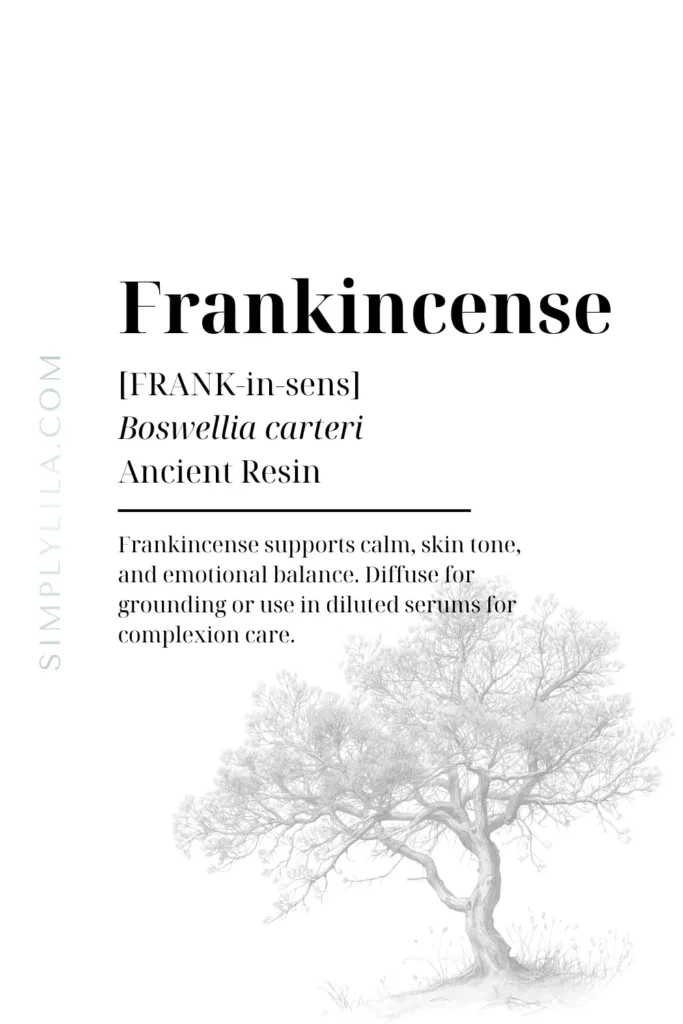
Frankincense Essential Oil (Boswellia carteri)
Properties: Anti-inflammatory, immunomodulatory and a natural astringent.
Best Uses: Calming anxiety and racing thoughts, supporting joint comfort, and improving skin tone and texture.
How to Use: Diffuse 4 to 5 drops to create a grounding, meditative atmosphere. Dilute to 2–3% in a carrier facial oil to create a beautiful anti-ageing serum. Natural skincare practitioners widely use it, and for good reason.
History: People across the ancient world burned frankincense resin in religious and ceremonial contexts for thousands of years. Its use stretched from ancient Egypt to early Christianity to the incense traditions of the Middle East. Traders considered it so precious that they transported it across continents. People listed it alongside gold as a worthy offering. The essential oil captures the same deep, resinous warmth that made the raw resin so revered.
Warnings: May cause mild skin sensitivity in some people. Always perform a patch test before facial application.
Buy: Cliganic Organic Frankincense Essential Oil
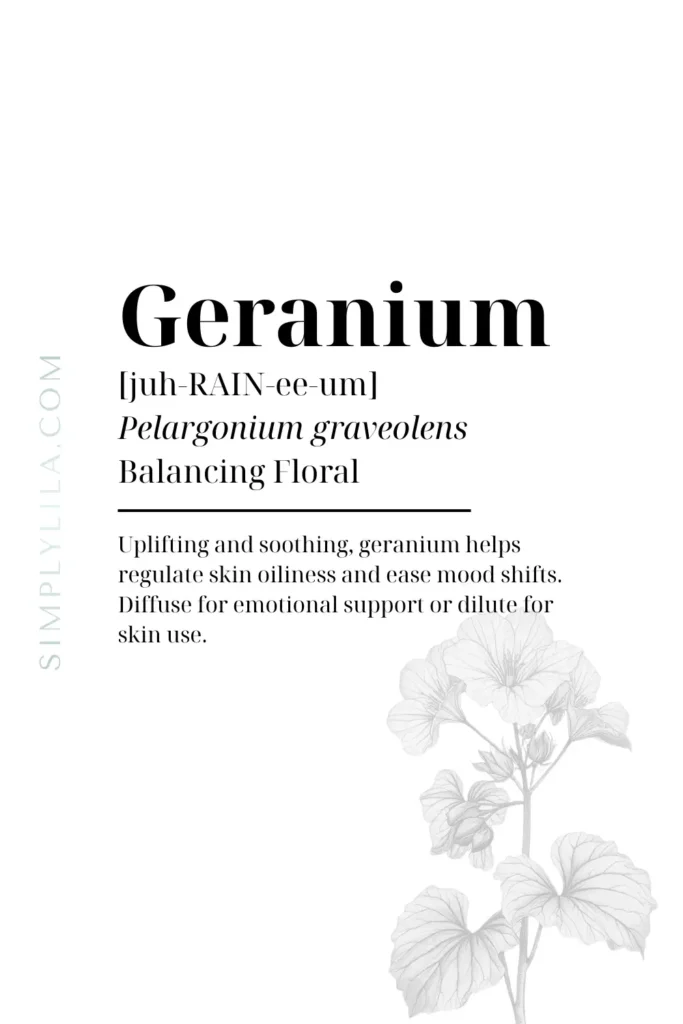
Geranium Essential Oil (Pelargonium graveolens)
Properties: Sebum-balancing, anti-inflammatory and gently uplifting.
Best Uses: Regulating skin oiliness, easing PMS-related mood dips and brightening a low-spirited day.
How to Use: Diffuse 3 to 4 drops to lift mood and create a floral, balancing atmosphere. Diluted to 2 to 3% in a carrier oil, apply to skin for balancing and calming effects, particularly useful for combination or oily skin types.
History: Both the Romans and ancient Egyptians cultivated geranium for use in perfumery and skincare preparations. Perfumers and cosmetic makers particularly prized the Rose Geranium variety for its ability to mimic the scent of rose at a fraction of the cost. This made it a staple of historical cosmetics.
Warnings: Possible skin irritation in sensitive individuals. Avoid during early pregnancy.
Buy: Cliganic Organic Geranium Essential Oil
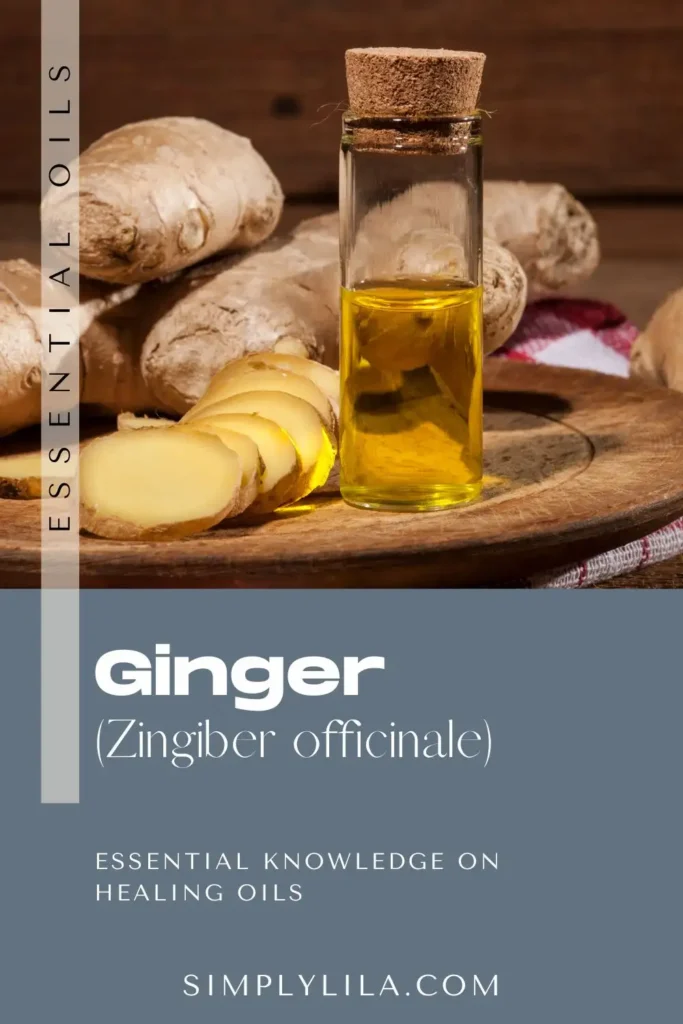
Ginger Essential Oil (Zingiber officinale)
Properties: Warming, anti-nausea and anti-inflammatory.
Best Uses: Settling upset stomachs, easing joint and muscle pain and supporting healthy circulation.
How to Use: Diluted to 1 to 2% in a carrier oil, massage gently over the abdomen for nausea relief. At 2 to 3% in a carrier oil it makes an excellent warming muscle rub, particularly useful after exercise or during cold, damp weather when joints feel stiff.
History: Ayurvedic and Traditional Chinese Medicine practitioners have used ginger as a digestive tonic for millennia. They valued it for its ability to settle the stomach, warm the body, and support circulation. It remains one of the most widely used medicinal plants across both traditional and modern herbal practice.
Warnings: Can irritate skin in some individuals, so patch test first. Avoid if you have gallstones without consulting a health professional.
Buy: Gya Labs Organic Ginger Essential Oil
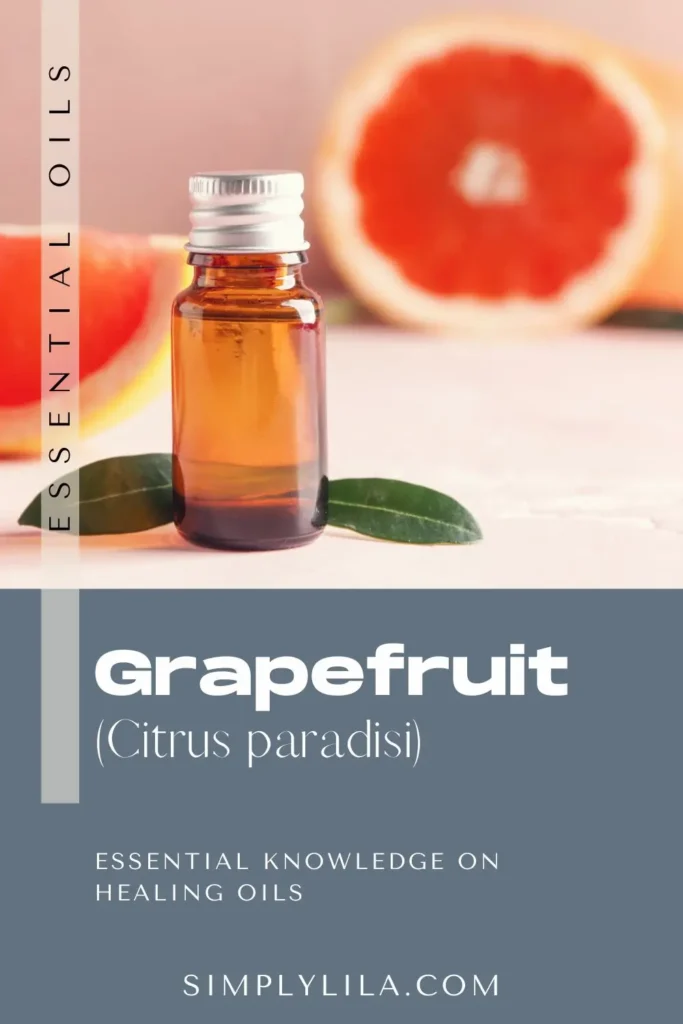
Grapefruit Essential Oil (Citrus paradisi)
Properties: Uplifting, detoxifying and naturally antiseptic.
Best Uses: Morning diffuser blends for an energising start, supporting lymphatic circulation, and body massage blends.
How to Use: Diffuse 3 to 4 drops in the morning for a bright, energising atmosphere. Diluted to 1 to 2% in a body oil, it makes a refreshing massage blend particularly good for areas of sluggish circulation.
History: Grapefruit was first documented in Barbados in the 18th century, believed to be a natural hybrid of the sweet orange and the pomelo. People quickly embraced it for its refreshing aroma and sharp, clean flavour. It eventually found its way into perfumery and natural health practices.
Warnings: Phototoxic. Avoid sunlight on treated skin for 12 to 24 hours after application. Dilute carefully and adhere to recommended percentages.
Buy: Cliganic Organic Pink Grapefruit Essential Oil
Lavender Essential Oil (Lavandula angustifolia)
Properties: Calming, gently analgesic and mildly antiseptic.
Best Uses: Promoting restful sleep, soothing minor burns and insect bites, and easing tension headaches. The most beginner-friendly oil on this entire list.
How to Use: Diffuse 3 to 5 drops at bedtime for a genuinely sleep-promoting atmosphere. Diluted to 2 to 3% in a carrier oil, apply to affected areas for skin soothing or to temples and the back of the neck for headache relief.
History: Lavender has one of the longest and most documented histories of any aromatic plant. Romans used it to scent both their baths and their laundry. Medieval herbalists used it for headaches, nervous conditions, and as a general tonic. In the First World War, lavender oil was used in field hospitals for its antiseptic properties. The word lavender itself comes from the Latin lavare, meaning to wash.
Warnings: Generally safe for most people including older children when diluted appropriately. Skin sensitivity is rare but possible. Always dilute before topical use.
Buy: Cliganic Organic Lavender Essential Oil
Lemon Essential Oil (Citrus limon)
Properties: Antimicrobial, detoxifying and mood-lifting.
Best Uses: Air purification, energising diffuser blends during low-motivation moments, and immune support during winter months.
How to Use: Diffuse 3 to 4 drops throughout work or study spaces for a bright, focused atmosphere. Dilute to 1–2% in a carrier oil for topical use. Only apply to skin that will not be exposed to sunlight.
History: Lemon was introduced to Europe during the Middle Ages, arriving with Arab traders. By the Renaissance it had become a sought-after ingredient in fine perfumes and was used medicinally for everything from scurvy prevention to fever reduction. Sailors carried lemons on long voyages for exactly this reason, making lemon one of the earliest documented functional foods and medicines.
Warnings: Phototoxic. Avoid UV exposure for at least 12 hours after any topical application.
Buy: Cliganic Organic Lemon Essential Oil
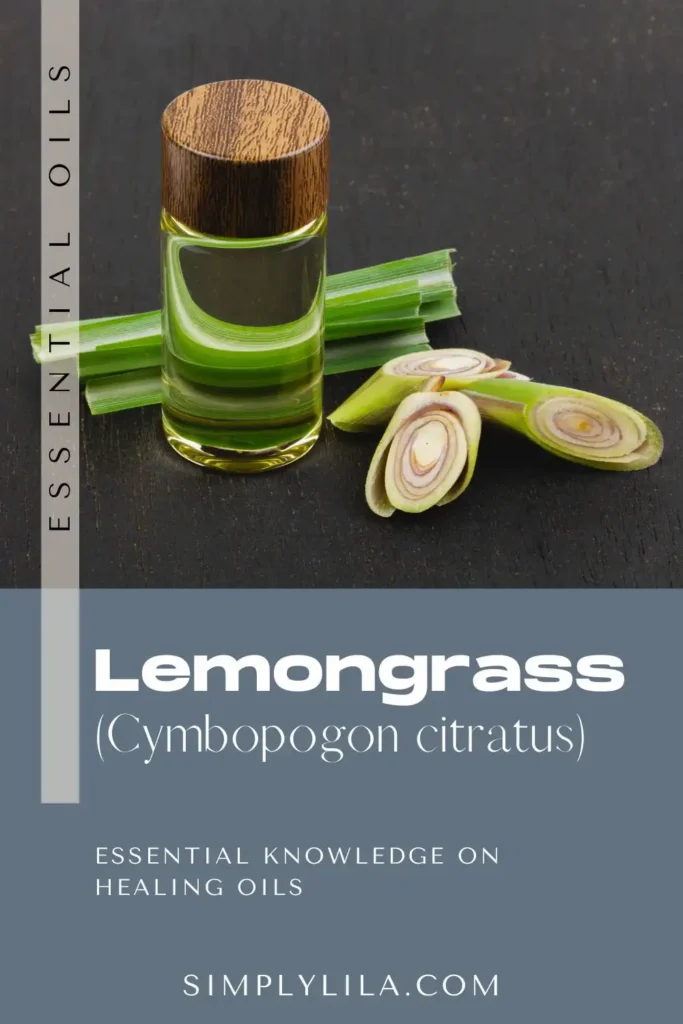
Lemongrass Essential Oil (Cymbopogon citratus)
Properties: Antifungal, antibacterial and invigoratingly refreshing.
Best Uses: Easing muscle aches after exercise, repelling mosquitoes and supporting healthy circulation.
How to Use: Diluted to 1 to 2% in a carrier oil, it makes a genuinely effective post-workout massage oil. Diffused or burned in a candle outdoors, it helps deter mosquitoes at garden gatherings or picnics.
History: Lemongrass is a cornerstone of Ayurvedic medicine, used for digestive support, fever reduction, and as a general tonic for centuries across South and Southeast Asia. Its strong, clean citrus scent made it a natural choice for freshening spaces and deterring insects long before synthetic alternatives existed.
Warnings: Can irritate sensitive skin. Always patch test first and dilute carefully.
Buy: Cliganic Organic Lemongrass Essential Oil
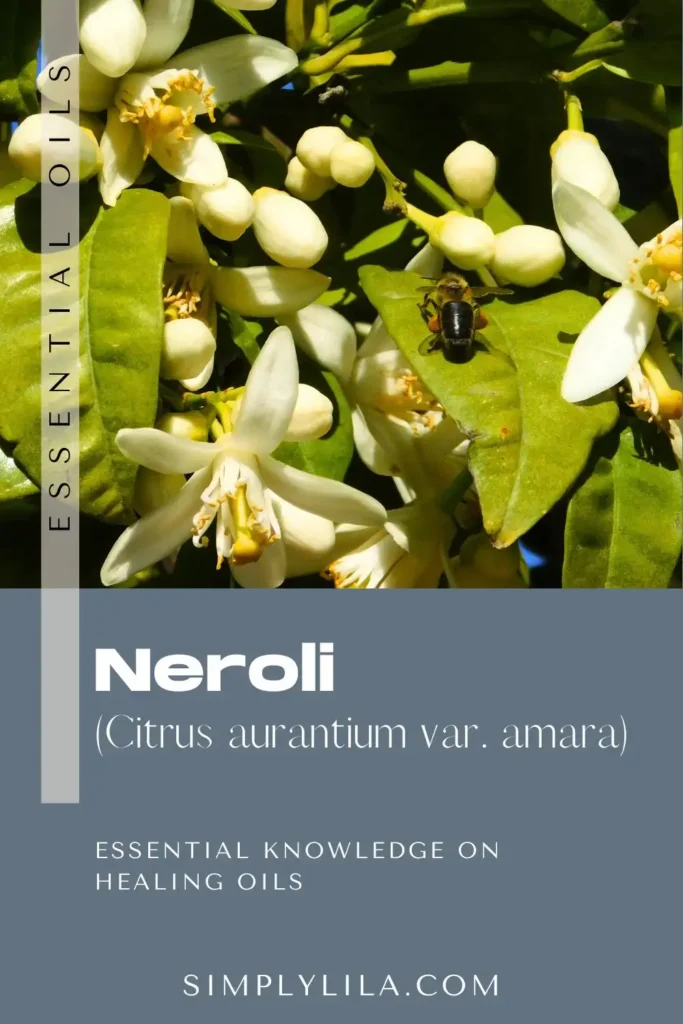
Neroli Essential Oil (Citrus aurantium var. amara)
Properties: Calming, a natural mood-lifter and gently antiseptic.
Best Uses: Reducing anxiety and nervous tension, supporting healthy-looking skin, and easing tension headaches.
How to Use: Diffuse 3 to 4 drops in living spaces for a beautifully floral emotional uplift. Diluted to 2 to 3% in a carrier oil, massage onto pulse points when feeling anxious or use the same blend as a protective facial serum.
History: Neroli is distilled from the blossoms of the bitter orange tree and has been used in Italian perfumery since the 17th century. It takes its name from Princess Anne Marie Orsini of Nerola, who famously popularised its use in cosmetics and made it a fashionable scent among European aristocracy. Neroli is one of the most labour-intensive oils to produce. It takes enormous quantities of blossoms to yield a small amount of oil. This is reflected in its price and its long-standing prestige in fine perfumery.
Warnings: Mildly photo-sensitising. Avoid direct sunlight on treated skin for at least 12 hours. Patch test before use on sensitive skin.
Buy: Avivni Neroli Organic Essential Oil
Oregano Essential Oil (Origanum vulgare)
Properties: Strongly antimicrobial, antiviral and a powerful natural antioxidant.
Best Uses: Spot treatment for minor skin blemishes and breakouts, respiratory support via steam inhalation.
How to Use: Diluted to 0.5% in carrier oil only (this is genuinely important, see warnings below) for spot-treating problem skin. One drop in steaming water for inhalation works well for congestion and upper respiratory support.
History: Oregano was employed extensively in ancient Mediterranean folk medicine for treating infections, digestive complaints, and respiratory conditions. The name comes from the Greek for “joy of the mountain,” and the plant was so valued that it was used in both medicine and ceremony across ancient Greek and Roman cultures.
Warnings: Extremely caustic. Never exceed 0.5% dilution on skin, even briefly. Avoid completely during pregnancy. Do not apply near eyes or mucous membranes.
Buy: Cliganic Organic Oregano Essential Oil
Patchouli Essential Oil (Pogostemon cablin)
Properties: Antidepressant, anti-inflammatory and a natural astringent.
Best Uses: Fading scar tissue over time, treating dry and mature skin, and using as a rich grounding scent in the home.
How to Use: Diluted to 3 to 5% in an unscented lotion, it’s excellent for mature, dry, or scarred skin. Diffuse 3 to 4 drops when you need to feel more centred and grounded, particularly useful during stressful or unsettled periods.
History: Patchouli arrived in Europe in the 19th century carried on fabric trade routes from India and Southeast Asia, where the dried leaves were packed with cloth and silk to deter moths during long sea voyages. Its distinctive, earthy-sweet scent became associated with the exotic textiles it had travelled with, and it quickly became a prized perfume ingredient in European markets. It later became strongly associated with the counterculture movements of the 1960s, which is perhaps why it still carries that particular cultural flavour for many people.
Warnings: Generally gentle and well-tolerated. Patch test first if you have very sensitive skin.
Buy: Cliganic Organic Patchouli Essential Oil
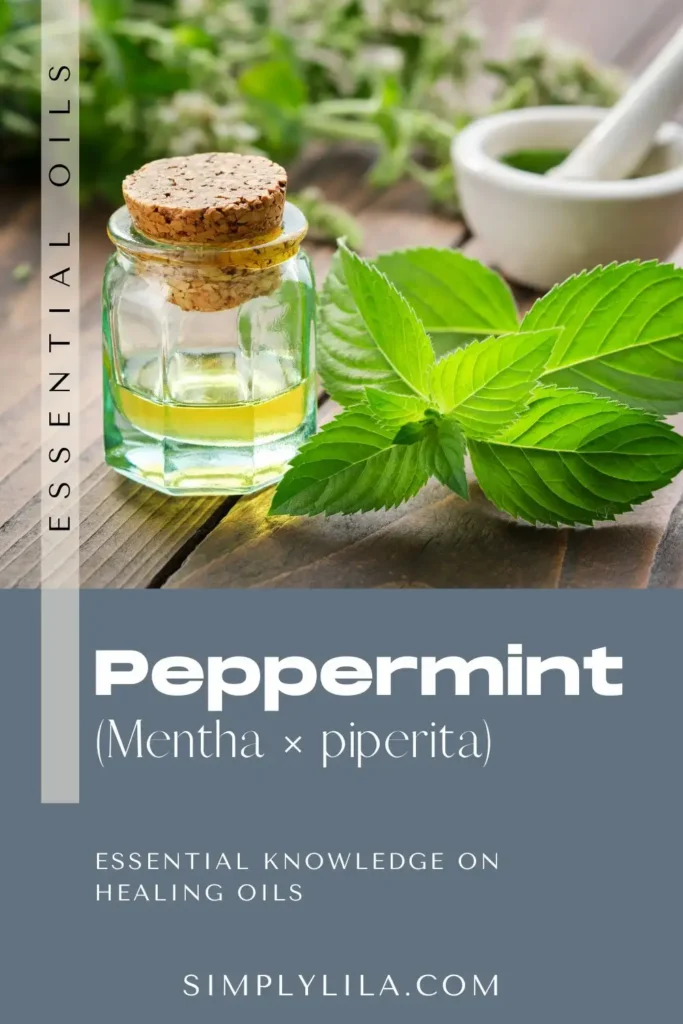
Peppermint Essential Oil (Mentha × piperita)
Properties: Cooling, analgesic and a strong digestive stimulant.
Best Uses: Relieving tension headaches, easing indigestion and bloating, and sharpening mental focus when you need to concentrate.
How to Use: Diluted to 1 to 2% in a carrier oil, apply to temples and the back of the neck for headache relief. Inhaling directly from the bottle (holding it a few inches from the nose) delivers a fast, sharp burst of alertness. For digestive discomfort, dilute and massage gently over the abdomen.
History: Peppermint is a natural hybrid of spearmint and watermint, first cultivated deliberately in 18th-century England. It quickly became one of the most commercially important medicinal herbs in the Western world, used for everything from digestive complaints to pain relief, and remains one of the most widely researched essential oils today.
Warnings: Can irritate mucous membranes. Avoid near eyes. Not for use on or near children under ten, and avoid in cases of G6PD deficiency. Always dilute before skin application.
Buy: Cliganic Organic Peppermint Essential Oil
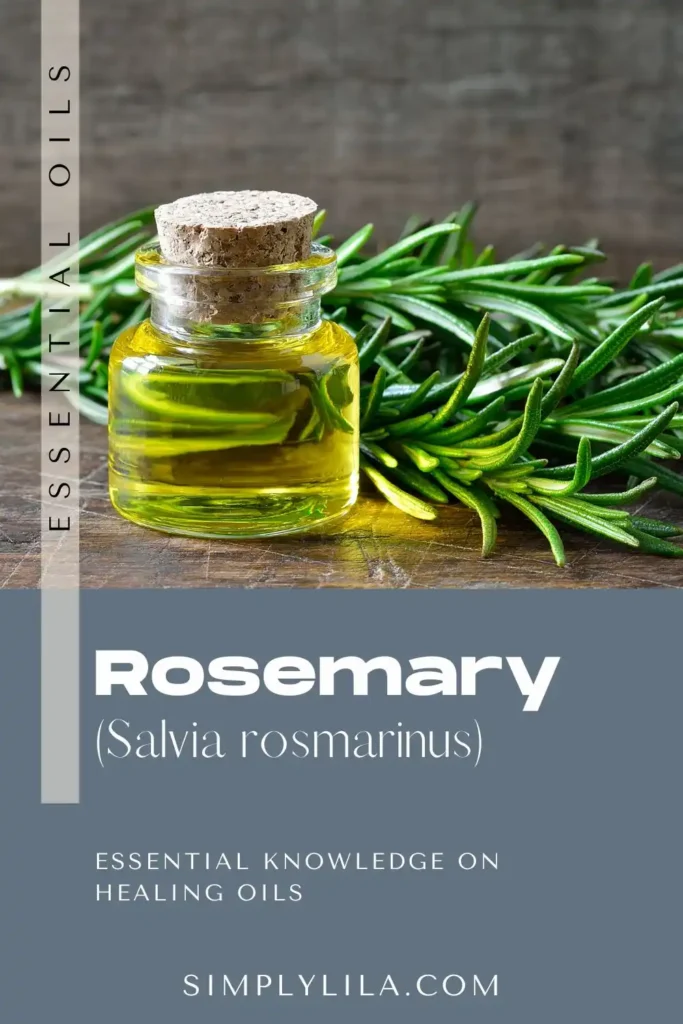
Rosemary Essential Oil (Salvia rosmarinus)
Properties: Stimulating, antioxidant-rich and strongly anti-inflammatory.
Best Uses: Boosting memory and concentration during study or focused work, easing muscle pain, and stimulating hair growth, one of the most well-evidenced uses for rosemary oil.
How to Use: Diffuse 3 to 4 drops in work or study spaces. Diluted to 2% in a carrier oil and massaged into the scalp twice weekly, it has a well-documented effect on hair density and growth that has attracted significant research attention in recent years.
History: Rosemary has been a symbol of remembrance and mental clarity since ancient Greece and Rome, where it was worn by scholars during examinations and placed on graves as a memorial. Medieval apothecaries used it extensively for its many documented properties, and it was one of the first plants to be distilled into an essential oil in Europe, making it one of the oldest recorded aromatherapy ingredients.
A note on chemotypes: Rosemary oil is available in several chemotypes, meaning different chemical profiles depending on growing region and harvest conditions. The most common are ct. camphor (stimulating, avoid in epilepsy and pregnancy), ct. verbenone (gentler, more suitable for skin and liver support), and ct. 1,8-cineole (the classic camphor-forward type most commonly sold). If your supplier specifies a chemotype, pay attention to it, as the safety profiles differ meaningfully.
Warnings: May raise blood pressure. Consult a doctor before regular use if you have hypertension. Avoid during pregnancy and in cases of epilepsy.
Buy: Cliganic Organic Rosemary Essential Oil
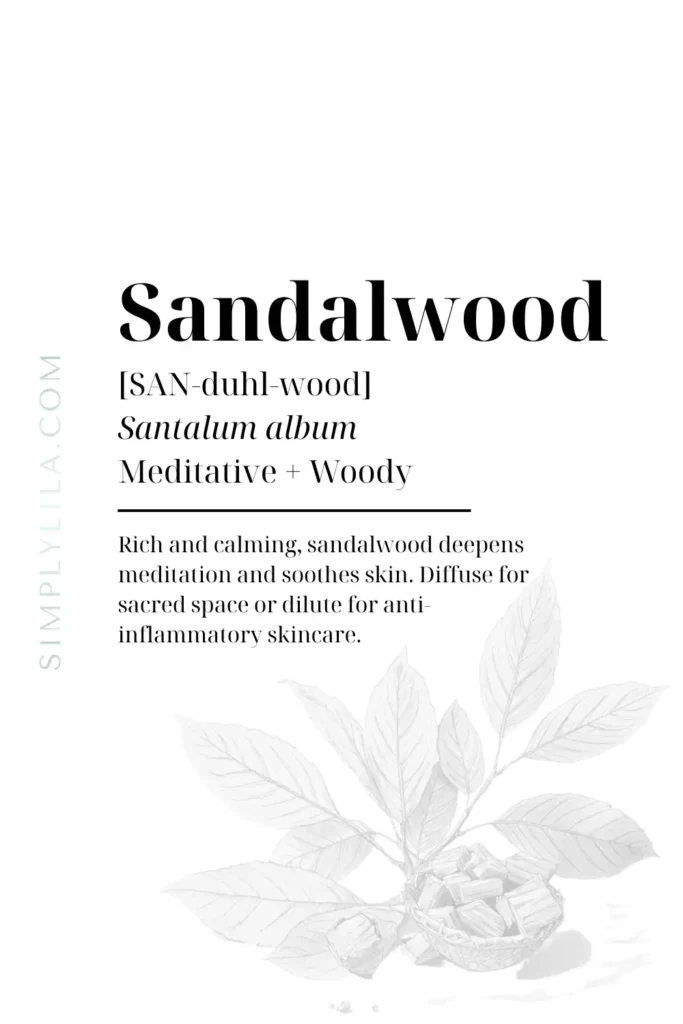
Sandalwood Essential Oil (Santalum album)
Properties: Deeply calming, anti-inflammatory and a well-regarded natural aphrodisiac.
Best Uses: Meditation and sacred space blends, dry skin relief, and balancing oily or combination skin.
How to Use: Diffuse 4 to 5 drops in spaces used for meditation, journalling, or any practice that benefits from a quieter, more inward atmosphere. Diluted to 3 to 5% in a carrier facial oil, sandalwood is a beautiful natural anti-inflammatory serum ingredient, particularly suited to sensitive or dry skin types.
History: Sandalwood has been sacred in Hindu and Buddhist traditions for over 4,000 years, used in temple rituals, funeral rites, and meditation practices across the Indian subcontinent and beyond. True Indian sandalwood (Santalum album) is now endangered due to centuries of harvesting demand, which makes sustainably sourced sandalwood an important consideration when purchasing.
Warnings: Generally safe for most people when properly diluted. Always dilute before topical use, especially on sensitive skin. Look for sustainably sourced options.
Buy: Gya Labs Sandalwood Essential Oil
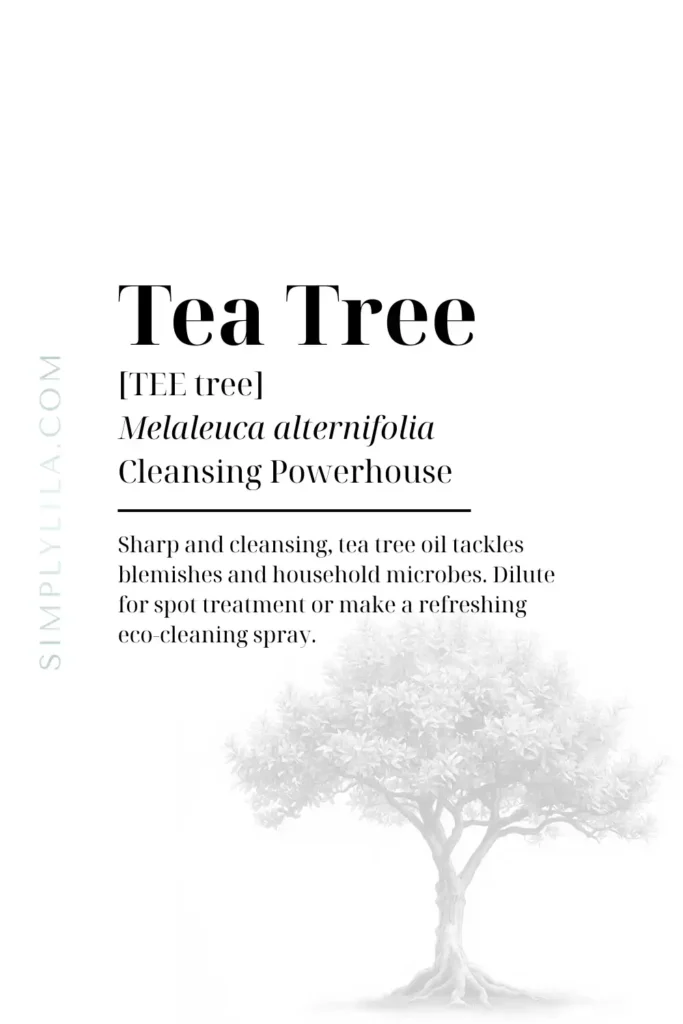
Tea Tree Essential Oil (Melaleuca alternifolia)
Properties: Antimicrobial, anti-inflammatory and naturally antifungal.
Best Uses: Acne and blemish spot treatment, treating athlete’s foot and minor fungal conditions, and as a base for a natural household cleaning spray.
How to Use: Diluted to 2 to 5% in a carrier oil for skin blemishes, apply directly to spots with a cotton bud. For a non-toxic all-purpose cleaning spray, add 5 to 10 drops to water in a spray bottle, shake well before each use.
History: Aboriginal Australians used tea tree leaves as a topical antiseptic for generations, crushing them and applying directly to wounds and skin infections. The plant’s therapeutic properties were formally documented by European researchers in the 1920s, leading to its widespread use in wound treatment during the Second World War and its eventual rise as one of the most popular essential oils globally.
Warnings: Can cause contact dermatitis in sensitive individuals. Always patch test. Do not ingest. Toxic to pets, particularly cats and dogs.
Buy: Cliganic Organic Tea Tree Essential Oil
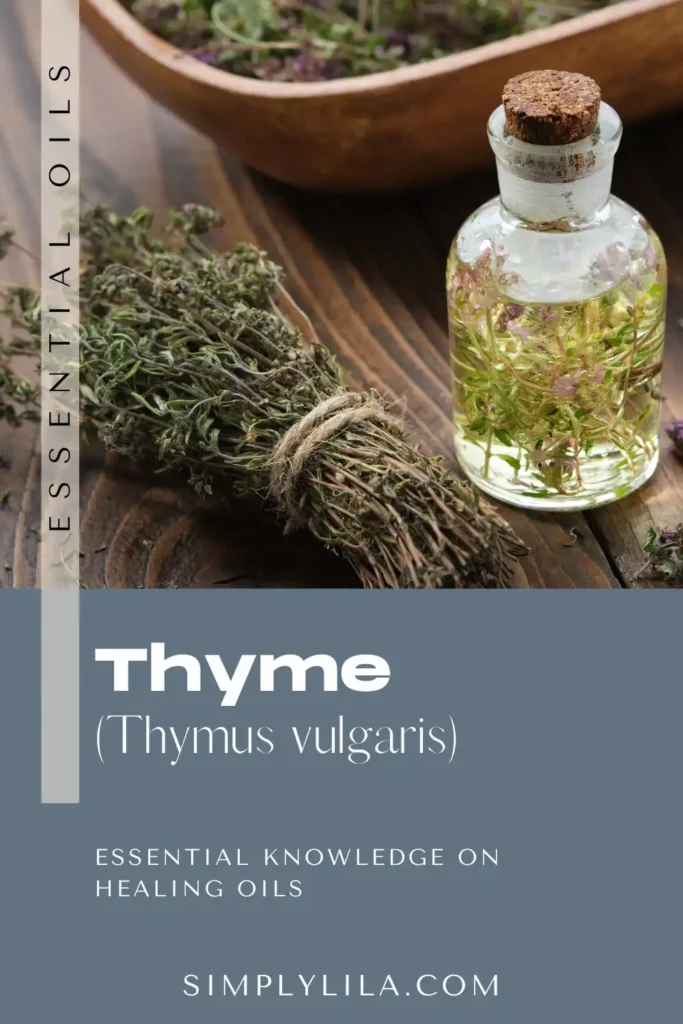
Thyme Essential Oil (Thymus vulgaris)
Properties: Strongly antiseptic, antimicrobial and a good respiratory stimulant.
Best Uses: Supporting lung health during respiratory infections, and disinfecting minor cuts and grazes.
How to Use: Diluted to 0.5 to 1% in a carrier oil for minor wound care. Add 1 to 2 drops to a bowl of steaming water, allow to cool slightly, and inhale for respiratory congestion support.
History: Thyme was valued in both ancient Egypt and Rome for its preservative and healing properties. Egyptian physicians used it in embalming preparations. Roman soldiers bathed in thyme water for courage before battle. In medieval Europe it was placed under pillows to ward off nightmares and used by herbalists for respiratory and digestive complaints.
A note on chemotypes: Thyme oil also varies significantly by chemotype. Thyme ct. thymol is the most common and the most potent, with the strict 0.5 to 1% dilution limits noted in this profile applying specifically to this type. Thyme ct. linalool is considerably gentler, more suitable for sensitive skin, and can be used at standard 2% body dilutions. If you’re buying thyme oil for skin use rather than respiratory support, ct. linalool is worth seeking out.
Warnings: A very potent oil. Avoid during pregnancy. Never apply undiluted to broken skin. Adhere strictly to dilution guidelines.
Buy: Plant Therapy Thyme Thymol Essential Oil
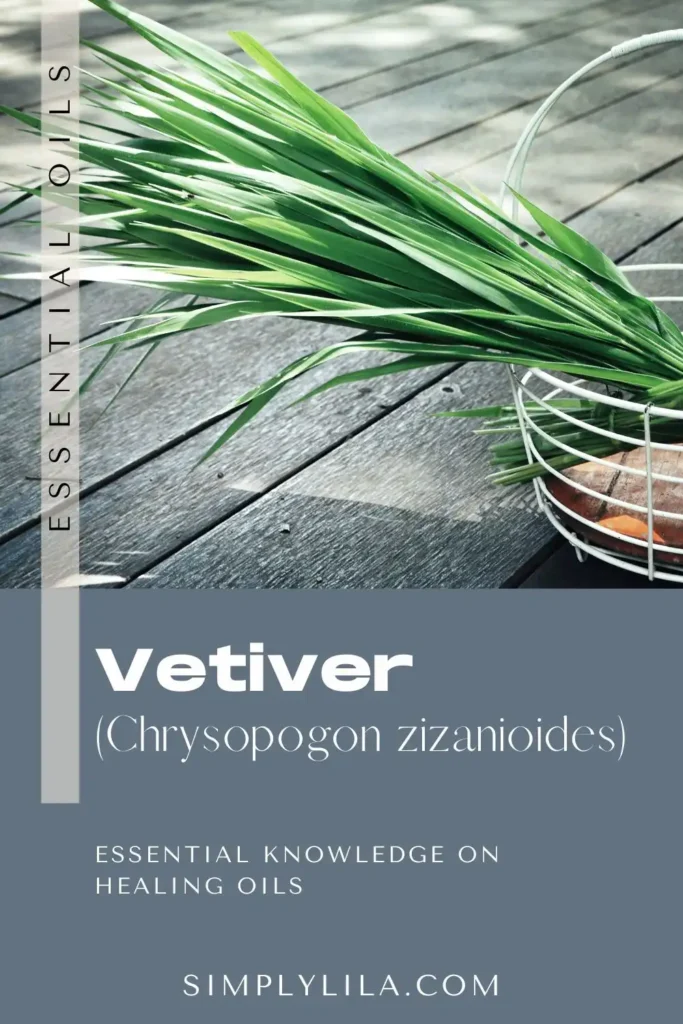
Vetiver Essential Oil (Chrysopogon zizanioides)
Properties: Deeply grounding, anti-inflammatory and regenerative.
Best Uses: Calming anxiety and nervous system overload, improving sleep quality, and supporting mature skin.
How to Use: Diffuse 3 to 4 drops in the bedroom before sleep. Diluted to 3 to 5% in a carrier body oil, use as part of an evening skincare or self-care routine. Due to its thick viscosity, warming the bottle briefly in your hands before use helps it blend more easily.
History: Vetiver is central to Ayurvedic cooling and stabilising preparations in India, where the root has been used for thousands of years. In traditional Indian practice, vetiver-infused water was used to cool the body during hot weather and calm the nervous system during periods of stress. The root was also woven into screens and mats to keep spaces naturally cool, releasing its earthy scent as water evaporated through it.
Warnings: Very thick and viscous. Dilute carefully to avoid a heavy feeling on the skin. Generally safe for most people.
Buy: Plant Therapy Vetiver Organic Essential Oil
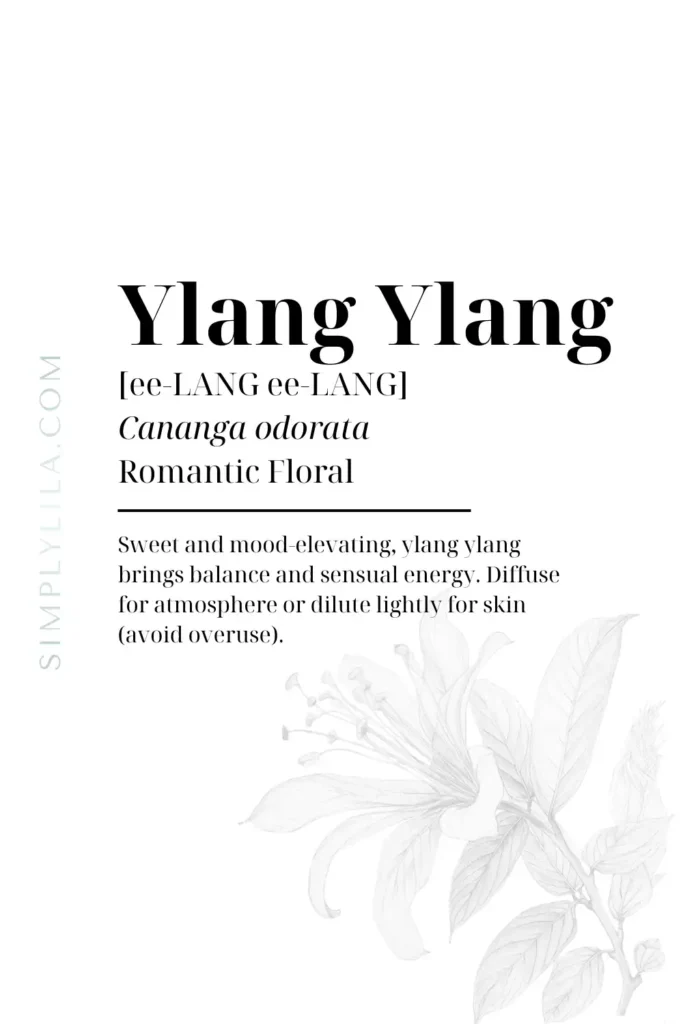
Ylang Ylang Essential Oil (Cananga odorata)
Properties: A natural aphrodisiac, mood-lifting and gently hypotensive.
Best Uses: Releasing tension and emotional stress, balancing oily skin and, let’s be honest, setting a more romantic atmosphere when the occasion calls for it.
How to Use: Diffuse 2 to 3 drops for a rich, floral atmosphere. Less is more with ylang ylang, as its scent is intense and can become overwhelming quickly. Diluted to 1 to 2% in a carrier facial oil, it works as a gentle balancing serum for oily skin types.
History: Ylang ylang has been integral to Indonesian perfumery and hair treatments for centuries. In the Philippines, the flowers were traditionally strewn across the beds of newlyweds as a symbol of love and intimacy. The oil was introduced to European perfumery in the 19th century and has been a key note in some of the world’s most famous fragrances, including Chanel No. 5.
Warnings: May lower blood pressure. Use with caution if you have hypotension. Use sparingly — excessive amounts can cause headaches and nausea in some people. Stick to the recommended 2 to 3 drops when diffusing.
Buy: Cliganic Organic Ylang Ylang Essential Oil
Practical Takeaways: Where to Begin If You’re New to Essential Oils
If you’re standing at the beginning of all this and feeling slightly overwhelmed by twenty-five options, here is an honest and easy starting point.
Buy three oils first. Lavender for sleep and skin. Peppermint for focus, headaches, and digestion. Lemon or grapefruit for morning energy and air freshening.
These three cover the most common everyday needs, are among the safest and most beginner-friendly, and will give you a real sense of how oils work in your home and on your body before you expand your collection.
Get a good carrier oil. Fractionated coconut oil or jojoba are both excellent all-rounders and relatively inexpensive. You’ll use them for almost everything topical.
Invest in a quality diffuser. A classic ultrasonic table-top diffuser is the most accessible starting point.
If you want your whole home to benefit, a waterless app-controlled diffuser is worth exploring once you know which oils you love. Especially true if you’re a person who likes to create a delightful atmosphere for all the senses!
Keep the dilution guide from the safety primer section bookmarked. Most problems people have with essential oils come down to using them undiluted or in too high a concentration. Get that right and the rest follows naturally.
If you’re interested in how plant-based natural remedies more broadly can support everyday wellness, my guide to dandelion health benefits covers another whole category of plant medicine that works beautifully alongside an essential oil practice.
The Quiet Power of Plants in Concentrated Form
Pause and consider this: cultures across the world, with no contact with each other, used many of these plants therapeutically for thousands of years. Somehow, they kept arriving at the same conclusions. Lavender for calm. Peppermint for digestion and pain. Frankincense for ceremony and healing. Clove for oral care and preservation.
That convergence isn’t coincidence. It’s the accumulated, careful observation of what works, passed forward across generations. Modern research is increasingly confirming what traditional practice already knew, and that conversation between old knowledge and new evidence is one of the more exciting things happening in natural health right now.
Use essential oils as a complement to medical care, not a replacement for it. But as part of a thoughtful, natural approach to daily wellbeing, they offer something real. Start small, use them safely, pay attention to how your body responds, and let your collection grow from there.
Frequently Asked Questions About Essential Oils
Q: What essential oils are best for beginners? A: Lavender, peppermint, and lemon are the most recommended starting oils. They’re versatile, widely available, well-researched, and among the safest for most adults. Between the three of them you have support for sleep, headaches, focus, digestion, skin, and air freshening, which covers most everyday needs.
Q: Do essential oils need to be diluted before applying to skin? A: Yes, always. Essential oils are highly concentrated plant extracts and applying them undiluted can cause skin sensitisation, burns, and reactions that may prevent you from using that oil safely in future. A 2% dilution in a carrier oil is the standard for adult body use. Facial application should be 1%. See the safety primer at the top of this post for a full dilution guide.
Q: What carrier oils work best with essential oils? A: Fractionated coconut oil and jojoba oil are the most versatile for general use, as they’re lightweight, largely odourless, and suitable for most skin types. Sweet almond oil is good for massage. Rosehip oil works well for facial serums. The carrier oil you choose matters less than ensuring you use one consistently.
Q: Which essential oils are safe to use around children? A: Lavender, frankincense, cedarwood, and chamomile are among the gentler options for older children when properly diluted to 0.5 to 1%. Eucalyptus, peppermint, clove, and oregano should be avoided around young children. Always check individual oil safety profiles and consult a qualified aromatherapist for use with children under two.
Q: Which essential oils should be avoided during pregnancy? A: Basil, cedarwood, clary sage, oregano, rosemary, and thyme are among the oils most commonly advised against during pregnancy. As a general principle, it’s safest to consult a qualified aromatherapist before using any essential oil therapeutically during pregnancy rather than relying on general guidance.
Q: What does phototoxic mean, and which oils are phototoxic? A: Phototoxic means the oil causes a photosensitive reaction when skin treated with it is exposed to sunlight or UV light, resulting in discolouration, burning, or rash. The main phototoxic oils in this guide are bergamot, grapefruit, lemon, and neroli. Always apply these to skin that will be covered or not exposed to sun, or use bergapten-free versions where available.
Q: How long do essential oils last? A: Most essential oils last between one and three years when stored correctly, meaning in dark amber glass bottles, away from heat and light. Citrus oils have a shorter shelf life of around one year as they oxidise more quickly. Thicker resinous oils like sandalwood, vetiver, and patchouli actually improve with age and can last considerably longer. Always check for changes in smell or appearance as signs that an oil may have turned.
Q: Can essential oils be used around pets? A: This requires caution. Cats are particularly sensitive and cannot metabolise many essential oil compounds efficiently. Eucalyptus, tea tree, peppermint, clove, and citrus oils are among those most toxic to cats even via diffusion. Dogs are generally more tolerant but still sensitive. Keep diffusers in areas pets can leave freely, ensure good ventilation, and consult a veterinarian before using oils regularly in a home with pets.