

Why More People Are Turning to Water Fasting and How to Start
SimplyLila.com articles may contain affiliate links, and the information provided is for educational and informational purposes only. Please read the full disclosure HERE.
The first time I water fasted for five days, I expected it to be one of the hardest things I’d ever do. I’d spent years in competitive bodybuilding, following structured eating plans and measuring everything.
The idea of simply stopping, drinking only water, and seeing what happened felt almost reckless by comparison.
What actually happened ended up surprising me. By the end of day three, the usual mental noise I was used to quietened in a way I’d never experienced before.
My hunger settled into something calmer. There was a clarity I can only describe as the feeling of the body getting on with something important, without the constant interruption of digestion.
I’ve been fasting regularly for over six years now. A minimum of two longer fasts a year alongside daily intermittent fasting. I still find it one of the most informative and genuinely transformative practices I return to.
Not because it’s easy, and not because it’s for everyone, but because when approached thoughtfully, it teaches you things about your body that nothing else quite does.
This post is a foundation-level introduction to water fasting. What it is, what the research says, what to honestly expect, and how to approach it safely.
If it resonates and you want to go deeper, I have a free beginner’s guide and a full step-by-step protocol available that cover everything in much more detail.

What Water Fasting Is Not
Before we go further, it’s worth being clear about what water fasting is not. A lot of the confusion and anxiety around it comes from conflation with things it isn’t.
Water fasting is not supposed to be a quick weight loss method. Neither should it be a form of punishment or extreme discipline. It is not the same as starving, which implies involuntary deprivation.
Fasting is intentional and time-limited. It is not appropriate for everyone, and knowing that in advance is part of approaching it responsibly.
And it is not something that needs to be pushed through at any cost. The value is not in duration or endurance. It’s in awareness and a beautiful reconnection of the body and mind.

What Is Water Fasting, and How Is It Different from Other Types?
Water fasting means consuming only water for a set period of time. No food, no juice, no supplements, no calories of any kind. Just water.
It’s worth distinguishing this clearly from practices that often get grouped under the same label.
| WATER FASTING | INTERMITTENT FASTING | JUICE FASTING | |
|---|---|---|---|
| WHAT YOU CONSUME | Water only | Food within a set daily window only | Fruit and vegetable juices |
| CALORIES? | Zero | Yes, within your eating window | Yes, primarily simple sugars |
| DIGESTION PAUSED? | Yes, fully | Partially | No |
| TRIGGERS AUTOPHAGY? | Yes, after extended period | Depends on fasting window and the person fasting | No |
| TRIGGERS KETOSIS? | Yes, typically by day 2–3 | Only with very extended windows | No |
| BEST FOR… | Deeper cellular reset | Sustainable daily practice & weight control | Transitioning from processed foods |
| BEGINNER-FRIENDLY? | Start with 24–36 hours | Yes, excellent entry point | More approachable but different effects |
The most important thing this table shows is that these are genuinely different tools with massively different physiological effects.
Juice fasting in particular is often grouped with water fasting in wellness spaces. They are not the same thing. In fact, physiologically speaking, they couldn’t be more different. Juice keeps digestion and insulin activity engaged. This limits the metabolic processes that make water fasting distinct.
Dry fasting (which you’ll notice I left out of the comparison table above) involves abstaining from both food and water. It is significantly more intense and not something covered or recommended here for beginners.

A Practice Rooted in Human History
Fasting itself is nothing new. It appears in every major religious tradition and cultural practice across every continent.
Ramadan in Islam involves daily fasting from sunrise to sunset. Yom Kippur in Judaism is a complete twenty-five hour fast. Lent in Christianity has historically included fasting periods. Ekadashi in Hinduism involves twice-monthly fasting.
Outside of religion, Hippocrates prescribed fasting as medicine. Ayurvedic and Traditional Chinese Medicine both used (and still do use) fasting as a therapeutic reset.
These weren’t trends. They were responses to something the body genuinely benefits from. Modern science is now finding the mechanistic explanation for what those traditions already understood.

What Are the Main Benefits of Water Fasting?
Cellular Repair, Autophagy, and Metabolic Flexibility
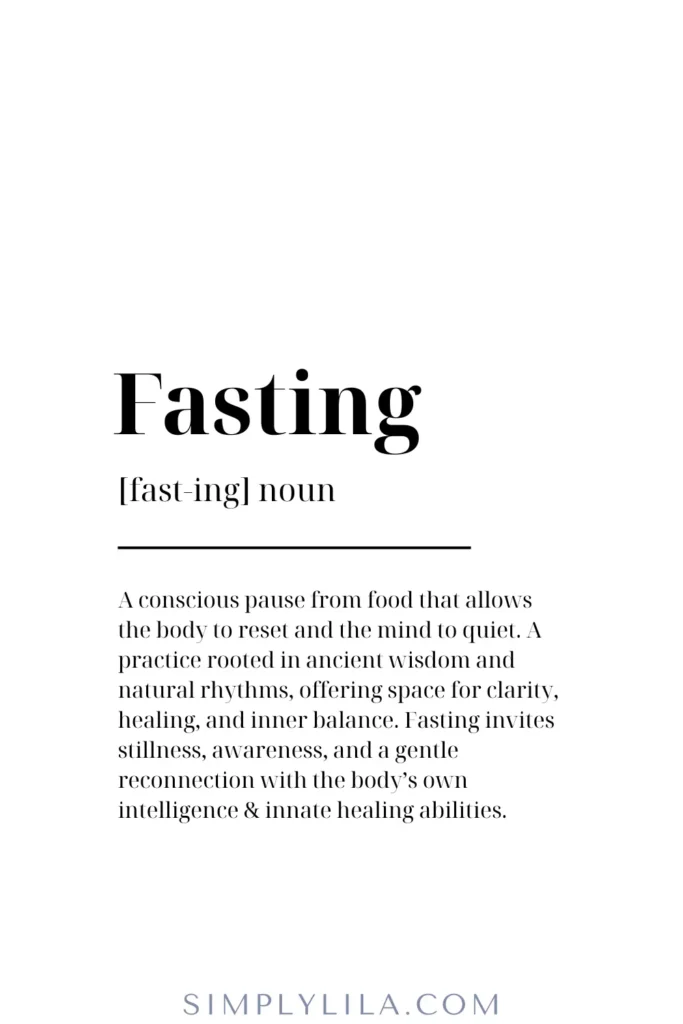
Cellular repair and autophagy activation is the mechanism that makes extended water fasting distinct from shorter dietary approaches. The deeper the fast, the more actively cellular repair processes appear to operate.
Metabolic flexibility is another key benefit. Fasting trains the body to switch between glucose and fat as fuel sources more efficiently. People who fast regularly often report more stable energy and reduced cravings. These effects tend to persist well beyond the fasting period itself. I have also found this to be true in my personal experience.
Mental clarity is one of the most consistently reported experiences among water fasters, including in my own. The reduction in digestive demand appears to free up cognitive resources in a way that’s hard to describe until you’ve felt it. By day three of a longer fast, the mental quietening can feel profound.
Heart Health, Immunity, and Inflammation
Studies have shown associations between regular fasting and reductions in blood pressure, improvements in cholesterol ratios, and reduced arterial inflammation.
These effects are likely a combination of the metabolic shift and the body’s repair processes operating more freely.
Research by Professor Valter Longo at the University of Southern California has shown that extended fasting can trigger the regeneration of new immune cells, prompting the body to renew parts of the immune system. You can read that study HERE.
Chronic low-grade inflammation underlies a wide range of conditions. Removing the constant inflammatory stimulus of digestion for an extended period appears to allow the body to reset its inflammatory baseline.

The Mental and Emotional Dimension
The mental effects of water fasting are consistently among the most reported experiences, and consistently underrepresented in research-focused content.
Most of what we interpret as hunger in the early phase of a fast is actually habit. It arrives at the times we usually eat, not in response to genuine energy need. It passes within twenty to thirty minutes if you don’t act on it. Genuine physiological hunger tends to decrease as a fast progresses beyond the first couple of days.
There is also an emotional dimension worth naming. When the constant ritual of food is removed, the habits and emotions usually insulated by those routines become more visible.
Some people find this peaceful. Others find it uncomfortable. Both are informative. The stillness fasting creates consistently has something to show you which will ultimately be a key to your continued growth.
Approaching this with curiosity rather than resistance is one of the most useful things I can suggest, especially when you’re starting out for the first time.

A Note on Individual Responses
Individual responses to fasting vary considerably. How a fast feels depends on your starting diet, toxic load, stress levels, sleep, and genetics.
Fasting is not a universal solution and may not be appropriate for everyone.
There is a detailed list of who should not fast in the FREE beginner’s guide linked at the end of this post.
If you’re interested in how whole foods support similar cellular processes, my post on the health benefits of seeded grapes covers resveratrol and autophagy-related research in a complementary context.

What Is Autophagy and Why Does It Matter?
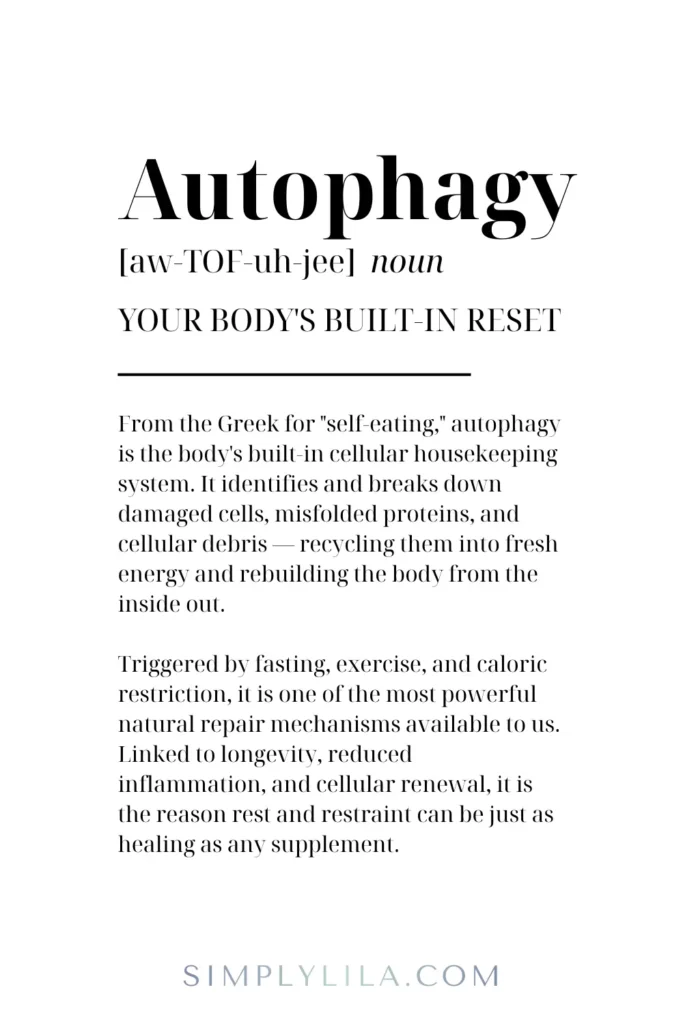
Autophagy is the body’s internal recycling and repair system. The word comes from the Greek for “self-eating,” which sounds alarming but describes something remarkable.
Cells break down and clear out damaged or dysfunctional components, then either repurpose the materials or eliminate them. It’s essentially the body’s housekeeping system. It runs most actively when the body is not occupied with digestion.
Research suggests autophagy becomes more active during extended fasting, particularly after the body has shifted into fat-based metabolism (ketosis). It has been linked to cellular repair, reduced inflammation, and biological aging processes.
The 2016 Nobel Prize in Physiology was awarded to Yoshinori Ohsumi for his work on autophagy mechanisms. That gives you some sense of how seriously this process is now taken by mainstream science.
Is Water Fasting Safe?
The Honest Answer
Water fasting, for generally healthy adults approaching it thoughtfully and with proper preparation, is considered safe for short durations.
A peer-reviewed chart review published in BMC Complementary Medicine found that the vast majority of adverse events during medically supervised water fasting were mild to moderate, with no serious adverse events recorded. You can read that study HERE.
For those curious about longer fasts in the five to twenty day range, a 2023 narrative review of human trials published in Nutrition Reviews found that prolonged water fasting appears to be a moderately safe therapy when approached correctly, with no serious adverse events or deaths reported across the trials reviewed. You can read that study HERE.
The research supports this, and millennia of traditional practice across cultures backs it up. That said, it is not appropriate for everyone, and this needs to be stated clearly rather than buried in fine print.
Who Should Avoid Water Fasting?
Water fasting is generally not suitable, without qualified medical supervision, for anyone who is pregnant or breastfeeding, under eighteen, has a history of eating disorders or disordered eating, has diabetes or blood sugar regulation issues, has gout or kidney disease, has very low blood pressure, is taking medication that requires food, or has any chronic illness that affects metabolism or hydration.
If any of those apply to you, please speak with a healthcare professional before considering fasting of any kind. This isn’t excessive caution. These are genuine contraindications where fasting can cause real harm.
For everyone else: the key is preparation, realistic expectations, and the willingness to stop early if your body asks you to. Ending a fast before you planned is not failure. It is good judgement, and you can always return to it when you’re ready.

How Do You Prepare for a Water Fast?
What Makes the Difference Between a Smooth Fast and a Difficult One
One of the most consistent things I’ve noticed over my years of fasting is that how a fast feels is disproportionately determined by what you do in the days before it begins.
Preparation isn’t about rigidity or restriction. It’s about giving your body the kindest possible entry point into a significant metabolic shift.
In the days before a fast, simplifying your food makes the transition considerably easier. Lighter meals, cutting out processed foods, and reducing sugar, caffeine, and alcohol reduce the intensity of the adjustment once food is paused.
The more work your body has to do to clear a heavily processed diet before shifting into a fasting state, the harder the first couple of days tend to feel.
Hydration and Mental Preparation Matter More Than Most People Think
Hydration before a fast matters as much as hydration during it. Many people begin a fast already mildly dehydrated.
This amplifies the headaches, dizziness, and fatigue that characterise the early adjustment phase. Drinking water consistently in the days before, rather than dramatically increasing on day one, sets a much steadier foundation.
Mental preparation is something most resources skip over and shouldn’t. Fasting isn’t just a physical experience. It surfaces your relationship with food, with routine, and with the habit of reaching for something to eat whenever you feel restless.
Going in with curiosity rather than expectation makes a significant practical difference.

Why Electrolytes Matter and What Actually Happens to Them
This is worth understanding properly because the physiological reason explains a lot of what people experience in the first two days.
Glycogen is stored alongside water at roughly a 1:3 ratio.
For every gram of glycogen, the body holds approximately three grams of water. As glycogen depletes during fasting, that water is released. With it go the electrolytes it was carrying, primarily sodium, potassium, and magnesium.
This is why fasting headaches, muscle cramps, dizziness, and heart palpitations tend to cluster around the first two days.
The body isn’t failing. It’s going through a mineral flush that is entirely predictable and largely preventable.
Adding a small pinch of mineral-rich salt to water, or using a clean electrolyte supplement without added sugars or stimulants, replaces what’s being lost and makes the transition considerably more comfortable.
These electrolyte sachets are what I use personally. If you want to go deeper into understanding your metabolic response, the Ketosens Starter Kit measures blood ketones directly, giving you a real-time picture of exactly where your body is in the fasting process.
Timing Your Fast Well Makes Everything Easier
Fasting during a quieter period, when you can reduce intense exercise, social commitments, and external demands, gives your body more of the energy and recovery space it needs. Rest is not weakness during a fast. It’s part of the process.
The free beginner’s guide and the full paid protocol both include significantly more detailed preparation guidance, including a full preparation checklist, specific hydration formulas, and a complete list of supportive tools. Links to both are at the end of this post.

What Should You Expect During a Water Fast?
What Typically Happens, and What It Means
Everyone’s experience with fasting is different, and the variables are significant. Your usual diet, your toxic load, your stress levels, your sleep quality, and your individual metabolic profile all affect how a fast unfolds.
That said, there are patterns that emerge consistently enough to be worth knowing in advance.
In the early phase, hunger tends to be more about habit and routine than genuine energy need. You will likely feel hungriest at the times you would normally eat, not because your body needs food, but because it’s expecting it.
This passes. Mild fatigue, some mental fog, and a general sense of the body adjusting are all normal in the first day or two.
The Transition Phase: Why Day Two Can Feel the Hardest
As the body transitions into fat-based metabolism, usually around day two for most people on a standard diet, things can feel like the most uncomfortable part of the whole fast.
Headaches, feeling cold, dizziness on standing, and lower energy are all common. This is the body switching fuel systems, not the body failing. Electrolyte support and rest are the most useful responses here.
What Happens Once Your Body Settles In
Once the metabolic transition is complete, many people experience a notable shift. Reduced hunger, clearer thinking, steadier mood, and a more inward, quieter quality to the experience.
This is the phase most people are trying to reach when they fast. It’s why the preparation and early discomfort are worth persisting through carefully.
I’ll stop there deliberately. The full day-by-day breakdown for days one through five, including what’s specifically happening in the body at each stage and what helps most at each point, is one of the core sections of my paid fasting guide. It’s detailed, specific, and worth reading before you attempt anything beyond thirty-six hours.
How Do You Break a Water Fast?
Why Re-feeding Matters as Much as the Fast Itself
This is the section most water fasting content glosses over. It genuinely shouldn’t – it’s arguably one of the most important parts of fasting.
How you break a fast matters as much (if not more) as the fast itself. After an extended period without food, the digestive system is quieter and significantly more sensitive.
The way food is reintroduced sends a powerful signal. Either one of safety and gradual nourishment, or one of shock and overwhelm.
Rushing back into large meals or high-sugar foods immediately after a fast can cause real discomfort, blood sugar instability, bloating, and fatigue.
Even after an otherwise smooth fast. I’ve made this mistake once. That was enough.
What to Eat When Breaking a Short Fast
For shorter fasts under forty-eight hours, re-feeding is relatively straightforward. Gentle, water-rich foods work best.
Cucumber, watermelon, small amounts of broth, or a date or two ease the digestive system back into activity without overwhelming it.
For longer fasts, the re-feeding period requires more planning and care. The longer the fast, the longer and more deliberate the re-feeding needs to be.
The full re-feeding protocol, including exactly what to eat, what to avoid and why, and the gradual progression back to normal eating, is covered in detail in my paid guide. Getting this right genuinely affects how beneficial the whole experience is.
If you’re looking for a gentle, nourishing food to break shorter fasts with, my post on why dates are one of the best foods to eat daily explains why they work so well as a first food after a fast.

What Are the Most Common Mistakes Beginners Make?
Most difficulties during a first water fast are traceable to things that happened before the fast began, not during it. Here are the ones I see most often.
Starting with too long a duration. Attempting a five-day fast as your first experience is one of the most reliable ways to have a difficult time. Twenty-four to thirty-six hours teaches you more about how your body responds than any amount of research. It’s the only honest starting point.
Not simplifying food beforehand. Going from a diet high in processed food and sugar directly into a water fast means the body is managing multiple transitions at once. Three days of lighter, whole-food eating beforehand changes this significantly.
Expecting the wrong kind of experience. Many first-time fasters expect either a transcendent clarity experience from day one, or a miserable endurance test.
Most people experience something considerably more ordinary. Some hunger, some quiet, some adjustment. Managing expectations reduces both disappointment and unnecessary anxiety.
Not planning for rest. Scheduling a fast during a busy, socially demanding week and then wondering why it felt hard. Fasting during a quieter period makes the whole experience smoother and more instructive.
Breaking the fast too quickly or too heavily. Knowing in advance what you’re going to eat when you break the fast, and having those foods ready, removes the moment of poor decision-making that happens when you’re hungry and the kitchen is full of whatever was already there.

Practical Takeaways: How to Actually Start
If you’re genuinely considering your first water fast, here is the most honest starting-point advice I can give.
Start with twenty-four to thirty-six hours. Begin after your evening meal so that sleep covers a significant portion of your first fasting window. See how your body responds. Then build from there.
Simplify your food for two to three days beforehand. Reduce sugar, caffeine, processed food, and alcohol. Eat lighter, whole-food meals. Let the transition happen gradually rather than abruptly.
Drink water consistently throughout. Aim for around 33ml per kg of bodyweight per day as a rough baseline. Sip steadily rather than drinking in large amounts at once.
Plan for electrolyte support if you go beyond twenty-four hours. These electrolyte sachets are what I use, and keeping mineral levels stable makes the metabolic transition considerably more comfortable.
If you want to monitor your ketone levels, these urine ketosis test strips are a simple starting point. For a more accurate picture of blood ketones in real time, the Ketosens Starter Kit is worth considering if you plan to fast regularly.
For gentle elimination support during longer fasts, Organic Senna Tea is what I use daily in the afternoons. I personally prefer loose Organic Senna Leaves at home, though the tea bags travel better.
For a deeper historical and philosophical context on fasting as a healing practice, Arnold Ehret’s Rational Fasting is a genuinely fascinating read.
Ready to Go Deeper?
If this post has sparked your curiosity and you want a proper foundation before attempting your first fast, I have two resources specifically designed for this.
The free beginner’s guide is a calm, thoughtful introduction to short water fasting for healthy adults. It covers the basics of what fasting is, what you might notice, how to prepare gently, and how to approach re-feeding. It’s a great place to start if you’re entirely new to this.
The full water fasting guide goes considerably deeper. It covers the three fasting protocols I use personally, a complete preparation checklist, the full day-by-day breakdown for days one through five, the detailed re-feeding protocol, a fasting and hormones section for both women and men, a progression plan for building up to longer fasts, a printable daily tracker, and more.
LINK COMING SOON!
Both are written with the same emphasis on safety, self-awareness, and working with the body rather than against it.
Something That Has Always Been True
Fasting appears in the oldest written records of human health practice. It’s documented in Hippocratic medicine, in Ayurvedic texts, in Traditional Chinese Medicine, and in the sacred traditions of every major world religion.
Not as punishment or a weight loss strategy, but as a way of creating space for the body to do what it does best when given the chance.
Modern science is now providing the mechanistic explanation for what those traditions already understood.
Autophagy, metabolic switching, immune renewal, cellular repair. The language has changed. The underlying reality hasn’t.
I’m not asking you to fast. I’m not telling you it’s the right choice for you. What I’m saying is that this practice, done thoughtfully and with genuine respect for what your body is communicating, can be one of the most illuminating things you try.
It certainly has been for me. Wherever you decide to go from here, go with your body, not against it.

Frequently Asked Questions About Water Fasting
Q: What is water fasting and how is it different from intermittent fasting? A: Water fasting means consuming only water for a set period, with no food, juice, or calories of any kind. Intermittent fasting involves cycling between eating and fasting windows within a single day. Water fasting is more extended and triggers deeper processes like autophagy that shorter fasting windows generally don’t reach.
Q: Is water fasting safe for beginners? A: For generally healthy adults approaching it with proper preparation, short-term water fasting is considered safe. It is not appropriate without medical supervision for anyone who is pregnant, breastfeeding, under eighteen, has a history of eating disorders, diabetes, blood sugar issues, gout, kidney disease, very low blood pressure, or is on medication that requires food. If any of those apply, speak with a healthcare professional first.
Q: How long should a beginner water fast? A: Twenty-four to thirty-six hours is the sensible starting point. This gives you a genuine experience of the metabolic transition without the depth of physiological shift that longer fasts involve. From there, build gradually, always allowing the body time to adapt between fasts.
Q: What is autophagy and does water fasting really trigger it? A: Autophagy is the body’s cellular recycling process, where damaged or dysfunctional cell components are broken down and repurposed or eliminated. Research supports that water fasting promotes autophagy, particularly after the body has shifted into fat-based metabolism. Yoshinori Ohsumi won the Nobel Prize in Physiology in 2016 for his work on autophagy mechanisms.
Q: How do you break a water fast safely? A: Gently, with water-rich and easily digestible foods rather than large or heavy meals. For shorter fasts under forty-eight hours, light options like broth, watermelon, or cucumber work well. For longer fasts, the re-feeding period needs to be longer and more deliberate. The full re-feeding protocol is covered in the complete water fasting guide.
Q: What should you drink during a water fast? A: Water. Ideally pure, natural spring water if accessible. Many people add a small pinch of mineral-rich salt to support electrolyte balance, particularly during fasts beyond twenty-four hours. For longer fasts, a dedicated electrolyte supplement without added sugars or stimulants is worth considering.
Q: Does water fasting help with weight loss? A: There is typically significant weight loss during a longer water fast. A portion, roughly two kilograms in most people, is the physical weight of food in the digestive system and water retained with stored glycogen. This returns when eating resumes. Water fasting should not be used primarily as a weight loss strategy. It is a health practice where weight change is a potential side effect, not the goal.
Q: Can water fasting affect women’s hormones differently? A: Yes, meaningfully so. Female hormones fluctuate across the menstrual cycle in ways that affect stress response and energy needs. Timing fasts around the cycle, particularly favouring the follicular phase over the luteal phase, tends to make the experience more comfortable for many women. The full guide includes a dedicated section on fasting and hormones for both women and men.








I’ve been surfing online more than three hours today, yet I never found any interesting article like yours.
It is pretty worth enough for me. In my view, if all site owners and bloggers made
good content as you did, the net will be a lot more useful
than ever before.
Awww, thanks Sarah! I’m glad you found it interesting! Have an amazing day!
Lila