
From Energy to Digestion: 8 Reasons to Eat Dates Daily
SimplyLila.com articles may contain affiliate links, and the information provided is for educational and informational purposes only. Please read the full disclosure HERE.
There are foods that have survived thousands of years of human history not because they were fashionable, but because they genuinely worked.
Dates are one of them. They were eaten by desert travellers for endurance, by those fasting to ease the body back into eating, by labourers needing reliable energy, and by healers who understood their quieter, more structural benefits long before nutritional science existed to explain them.
Today they’re often reduced to a footnote on a clean-eating list: “high in fibre,” “natural sugar,” “a healthier sweet.” These labels aren’t wrong, but they’re incomplete in a way that undersells what dates actually do when eaten regularly and thoughtfully.
Here are eight grounded reasons to eat dates daily, along with the context that actually makes them useful.

What Makes Dates Different from Other Natural Sugars?
The Fibre Matrix That Changes Everything
The most important thing to understand about dates is not their sugar content. It’s the context their sugar arrives in.
Dates contain glucose and fructose, but bundled together with fibre, minerals, and plant compounds that slow digestion and moderate absorption.
This is fundamentally different from how refined sugar, honey, maple syrup, or agave behave in the body. Those sweeteners deliver sugar quickly and cleanly, with nothing to slow them down. Dates don’t.
The fibre present in whole dates slows gastric emptying, influences satiety, and softens the glucose response in a way that liquid or refined sweeteners simply cannot replicate.
Research suggests that some date varieties have a low-to-medium glycaemic response when eaten in sensible portions, which is a meaningful distinction for a fruit that tastes as sweet as it does. You can read the full paper HERE.
This is also why food form matters so much. Whole dates retain their natural fibre matrix and intact plant cell structure. Date syrup, date paste, and many processed date-based products alter or remove that structure, concentrating the sugars and reducing the natural buffering effect. The metabolic response changes as a result.
Whole dates behave as food. Processed date products behave increasingly like sweeteners.
If you’re thinking about how natural sweeteners compare more broadly, my post on seeded grapes and their healing compounds covers a similar theme around whole food versus isolated nutrients.
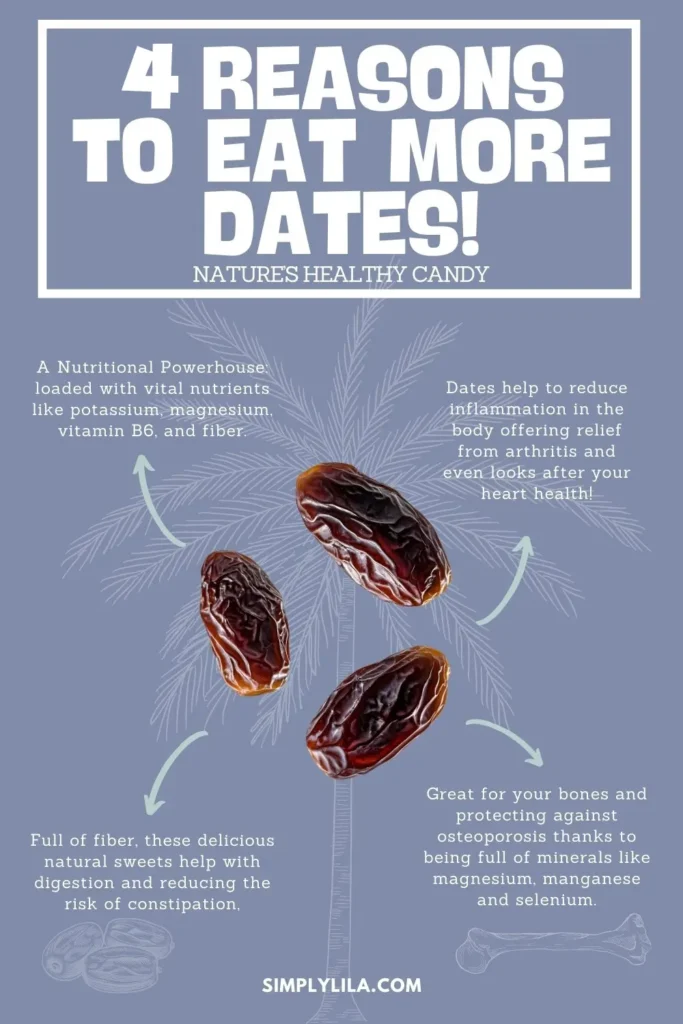
8 Health Benefits of Eating Dates Daily
1. They Provide Steady, Buffered Energy
Dates are one of the most reliable sources of natural, sustained energy available as a whole food. The combination of glucose, fructose, fibre, and minerals means the energy arrives gradually, does its job, and leaves without the dramatic spike and crash associated with refined sugar or ultra-processed snacks.
This is why dates have historically been valued during travel, physical effort, and long gaps between meals. Two to three dates before a workout provide a clean, accessible energy source that digests easily without sitting heavily.
Eaten in the mid-afternoon, they bridge the gap between lunch and dinner without triggering the kind of blood sugar dip that sends most people reaching for something processed.
For the average adult, two to three dates a day is a sensible daily amount for consistent benefit without overconsumption of natural sugars.

2. They Support Digestive Function and Gut Comfort
The fibre in dates is the obvious headline here, but the more interesting point is how that fibre behaves. Whole dates require proper chewing, which activates digestive signalling before food even reaches the stomach.
Saliva production increases, gastric juices are primed, and the digestive system is prepared to receive and process what’s coming in a way that soft, processed foods simply don’t trigger.
Their fibre content slows gastric emptying, feeds beneficial gut bacteria, and helps regulate stool consistency over time. For anyone dealing with sluggish digestion or irregular bowel habits, adding two to three dates daily to a well-rounded diet is one of the gentler, more practical adjustments available.
If your gut is particularly sensitive, try soaking dates in water for twenty to thirty minutes before eating.
This softens the flesh, makes them easier to digest, and is especially useful when transitioning the gut after a fast or during periods of digestive sensitivity.

3. They Contribute to Heart Health and Vascular Function
Dates are naturally high in potassium and low in sodium, a combination that research consistently links to healthy blood pressure regulation and vascular function over time. You can read a supporting study HERE.
Magnesium plays a supporting role in vascular relaxation and heart rhythm, and potassium helps counteract the effects of dietary sodium on arterial pressure. What makes whole-food mineral sources like dates valuable is that these minerals arrive in a bioavailable, food-based context alongside the other compounds the body needs to use them effectively.
My personal favourite for daily eating are these Organic Medjool dates from Amazon, which are consistently good quality and genuinely delicious.
A simple and deeply satisfying snack: a couple of pitted dates filled with walnuts or almonds, with a drizzle of melted 70%+ dark chocolate over the top, set in the fridge until firm.
More delicious than most things you can buy and better for you too.

4. They Support Bone Health Through Mineral Density
Dates provide a meaningful combination of minerals involved in bone structure and long-term skeletal health: potassium, magnesium, manganese, selenium, and copper.
Copper in particular plays a role in collagen formation, which is the structural protein that bones, joints, and connective tissue depend on. Magnesium supports nervous function and plays a role in how the body regulates calcium absorption.
This is especially relevant for women, aging adults, and anyone thinking beyond short-term nutrition toward long-term bone density. Dates alone won’t carry the full load, they’re naturally low in calcium and vitamin D, but they contribute meaningfully to the mineral foundation that bone health requires.
For those looking to support bone density more comprehensively alongside a food-based approach, Thorne Advanced Bone Support combines calcium, magnesium, vitamin D, and vitamin K in a well-formulated blend. For readers who prefer plant-based supplementation, AlgaeCal delivers calcium from marine algae rather than synthetic or rock-based sources, which many health-conscious readers find preferable.

5. They Support Muscle Function and Electrolyte Balance
Potassium and magnesium both play essential roles in muscle contraction, nerve signalling, and fluid balance. This is one reason dates have historically been valued during periods of physical exertion, travel, and fasting, when electrolyte depletion is a real concern and food needs to be portable, calorie-dense, and easy to consume.
For anyone who exercises regularly, dates are a genuinely useful pre or post-workout whole food. They provide accessible energy alongside the electrolytes that support recovery, without the artificial sweeteners, gums, and additives that most commercial energy products contain.
If you’re currently working through a water fast and thinking about re-feeding, my post on why more people are turning to water fasting covers how and why dates work particularly well in those transitional eating periods.

6. They Reduce Reliance on Ultra-Processed Snacks
This benefit is simpler than it sounds, but it’s worth stating clearly. Dates function as food, not flavouring. They satisfy sweetness cravings in a way that engages the whole digestive system rather than bypassing it.
When you replace a packaged energy bar, a handful of sweets, or a processed snack with two or three dates alongside a few nuts, you’re not making a sacrifice. You’re swapping something that burdens digestion and contributes nothing structural for something that nourishes, sustains, and leaves the body in a better state than before. That shift, made consistently, adds up quietly and meaningfully over time.
Pairing dates with fat or protein, nut butter, cheese, or a handful of mixed nuts, moderates the glucose response further and makes them genuinely satisfying rather than something you eat and forget immediately.

7. They Have Meaningful Anti-Inflammatory Properties
Dates contain several compounds with documented anti-inflammatory activity, including magnesium, flavonoids, and polyphenols found primarily in the skin.
Chronic low-grade inflammation is increasingly understood as an underlying factor in a wide range of conditions, from joint pain and digestive discomfort to cardiovascular disease and cognitive decline.
Adding anti-inflammatory whole foods to the diet (and/or water fasting) regularly is one of the most practical and accessible ways to address this at a foundational level. Dates aren’t a treatment for any specific condition, but as part of a diet that consistently prioritises whole, plant-rich foods, their anti-inflammatory contribution is real and worth including.

8. They Support Brain Health and Cognitive Function
Dates are rich in antioxidants, compounds that protect cells from oxidative stress, a process associated with ageing and cognitive decline. Emerging research suggests that the bioactive compounds in dates may help modulate neurological inflammation and support overall brain function, potentially lowering the long-term risk of neurodegenerative conditions.
They also contribute small amounts of B-vitamins, nutrients involved in energy metabolism and nervous system support. No single food is a cognitive silver bullet, but dates are a genuinely intelligent addition to a diet designed to support long-term brain health, particularly when eaten alongside other antioxidant-rich whole foods.

How and When Should You Eat Dates?
Food Pairing and Timing Make a Real Difference
Dates eaten alone are lovely. Dates eaten with intention are better.
Pairing dates with fat or protein changes how the body processes them. Fat slows digestion, protein moderates the glucose response, and the combination turns dates from a sweet snack into a genuinely sustaining one.
A date with almond butter, a date stuffed with a walnut, or dates alongside a small portion of cheese are all simple pairings that make a noticeable difference to how satisfied you feel afterwards.
Timing matters too. Dates work well before physical activity as a clean energy source. They’re excellent for breaking a fast gently, which is one reason they’re traditionally eaten to open the fast during Ramadan.
I personally find them most useful on the second or third day of re-feeding after longer water fasts, when the body needs gentle, accessible nourishment rather than anything heavy or complex.
People with sensitive digestion often tolerate dates better after meals rather than on an empty stomach, though they are generally well-tolerated by most people. If you’re new to eating them regularly, start with one or two and see how you feel before increasing.

Which Type of Dates Should You Choose?
A Quick Guide to the Main Varieties
Not all dates are the same. Pay attention to how different varieties feel in your body. This matters more than choosing the theoretically “best” one on paper.
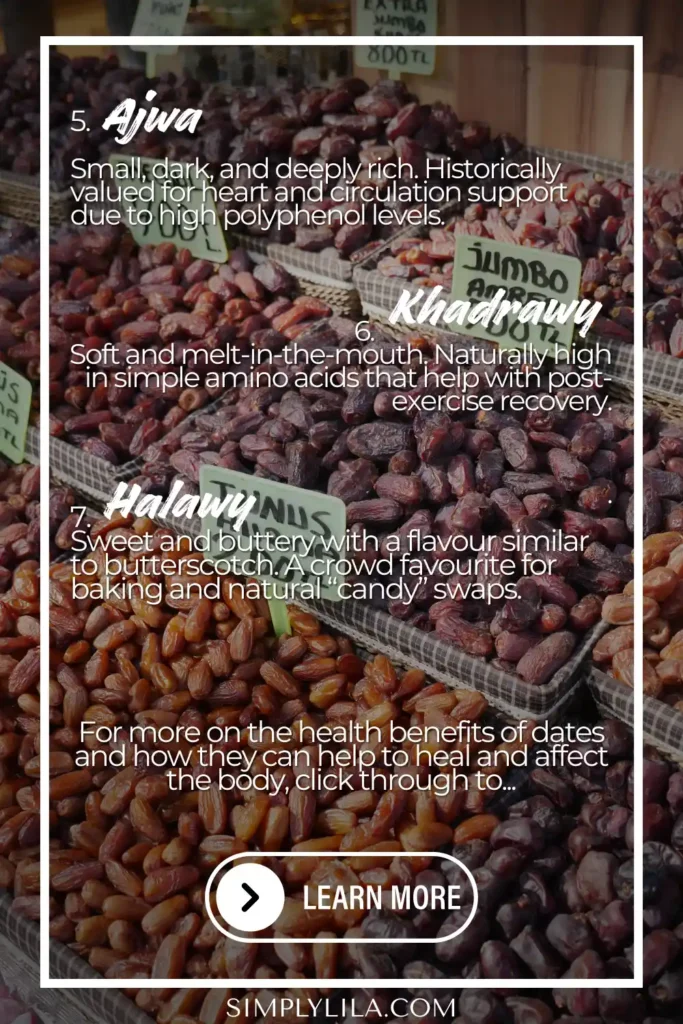
Medjool dates are large, soft, and high in moisture, with a rich caramel-like flavour. They’re the most widely available premium variety and the most versatile for both eating whole and using in recipes.
Deglet Noor dates are firmer, drier, and less sweet. They work particularly well in cooking and baking where you want a less sticky texture and a more subtle flavour.
Ajwa dates are smaller, denser, and darker, with a more complex flavour profile. They’re traditionally considered gentler on digestion and have been valued in Middle Eastern cultures for centuries for their grounding, nourishing quality rather than their sweetness alone. I find them particularly well-suited to eating during transitional periods, after fasting, during times of stress, or when the body needs support rather than stimulation.
Are There Times When Dates Aren’t the Right Choice?
Dates are nutrient-dense and generally well-tolerated by most adults, but they’re not universally appropriate in all contexts or quantities.
Those following very low-carbohydrate or strictly controlled dietary approaches may find dates difficult to include in meaningful amounts. People actively managing blood sugar conditions should pair dates with fat or protein. Eating them earlier in the day can help, when insulin sensitivity tends to be higher. It’s worth paying attention to your individual response rather than applying a general rule.
As with any whole food, metabolic response varies from person to person. If dates make you feel energised and well, eat them. IIf they don’t sit well for you, plenty of other whole foods offer similar benefits. Look for alternatives that provide comparable minerals and fibre.

How to Use Dates Beyond Eating Them Whole
The Sweetener Comparison Worth Making
When you swap refined sugar, honey, maple syrup, or agave for dates, you’re not making a like-for-like swap. You’re bringing fibre into the equation, which changes how the sweetness behaves in the body.
Date Lady Organic Date Syrup is the closest thing to a genuinely useful liquid date sweetener. It delivers a deep, caramel-like flavour in oatmeal, smoothies, dressings, and baking. It’s made from whole dates rather than refined extracts. This means it retains more of the fruit’s natural character than most alternatives.
For anyone who loves dates and wants to go deeper with creative, wholesome recipes, The Stuffed Dates Book is a genuinely lovely resource. I’d happily recommend it as a gift as much as a personal purchase.

3-Ingredient No-Bake Date Bites
If you want a snack that feels like a treat but keeps things genuinely clean, these are the ones to make. They take about ten minutes, require no baking, and are better than anything in a packet.
Ingredients (makes around 10 to 12 bites)
- 200g pitted Organic Medjool dates
- 60g rolled oats
- 20g cocoa powder.
How to make them
- If your dates are on the dry side, soak them in warm water for five to ten minutes and drain well before starting.
- Add all three ingredients to a food processor and blend until the mixture is sticky and clumping together. Roll into bite-sized balls between your palms.
- Optional: roll in a little extra cocoa powder for a finished look. Chill for twenty to thirty minutes to firm up.
Store in an airtight container in the fridge for up to one week, or freeze for longer storage.
For something more grounding, try pairing a couple of these bites with a square of 70%+ dark chocolate. Or fill them with a teaspoon of natural, unsweetened nut butter before rolling.

Practical Takeaways: How to Actually Use Dates Daily
Start with two to three Medjool or Ajwa dates a day and see how you feel. Pair them with a small amount of fat or protein for steadier energy and greater satiety. Try them before a workout as a clean, accessible energy source.
Use them to break a fast gently rather than reaching for something heavier. Swap processed snack bars for dates and nuts as your default between-meal option. Replace refined sugar in baking with date syrup or blended date paste. Make a batch of the no-bake bites on a Sunday and keep them in the fridge for the week.
None of this is complicated. That’s really the whole point.

Some Foods Don’t Need a Trend to Justify Them
There’s something worth sitting with in the fact that dates have been eaten daily across vastly different cultures. They span different climates and centuries. Yet they are still here, still relevant, still quietly delivering what they’ve always delivered.
They didn’t need a wellness influencer or a clinical trial to earn their place at the table. They earned it through consistent, practical, human experience across thousands of years.
That doesn’t mean we ignore the science, the science is genuinely interesting and increasingly supportive. It means holding traditional knowledge and modern research together. Some things have been working long before we had the language to explain why.
Two or three dates a day. With some nuts, or some dark chocolate, or just on their own in the afternoon. It’s one of the smallest, simplest, most ancient nutritional habits you can adopt, and it’s still one of the best.

Frequently Asked Questions About Eating Dates Daily
Q: How many dates should you eat a day? A: For most healthy adults, two to three dates a day is a sensible amount that delivers consistent nutritional benefit without overconsumption of natural sugars. If you’re pairing them with fat or protein, the effective glucose load is lower, so you have a little more flexibility. If you’re managing blood sugar closely, start with one and observe your individual response.
Q: Are Medjool dates better than other varieties? A: Medjool dates are larger, softer, and higher in moisture, making them the most versatile and widely available premium variety. But “better” depends on what you’re using them for. Deglet Noor dates are firmer and work well in cooking. Ajwa dates are traditionally considered gentler on digestion and have a more complex flavour. All three are nutritious. The best variety is the one you’ll actually eat consistently.
Q: Are dates good for gut health? A: Yes, meaningfully so. The fibre in dates feeds beneficial gut bacteria, slows gastric emptying, and supports regular, comfortable bowel function. The act of chewing whole dates also activates digestive signalling before food reaches the stomach. For anyone with sensitive digestion, soaking dates in water for twenty to thirty minutes before eating softens the flesh and makes them easier to process.
Q: What is the best time of day to eat dates? A: Dates work well as a pre-workout snack for clean, accessible energy. They’re excellent for breaking a fast gently. They make a satisfying mid-afternoon snack paired with nuts. People with sensitive digestion often find them better tolerated after a meal rather than on an empty stomach. There’s no single best time, but morning and early afternoon tend to suit most people best in terms of energy use.
Q: Can dates replace refined sugar in baking? A: Yes, with some adjustment. Blended date paste (dates soaked and blended with a little water) can replace refined sugar in most baked goods, moist cakes, and energy balls. Date syrup works well as a liquid sweetener in oatmeal, dressings, and smoothies. The texture and moisture content of recipes may need minor adjustment, but the flavour trade-off is almost always worth it.
Q: Are dates suitable for people managing blood sugar? A: Dates have a lower glycaemic impact than their sweetness suggests, particularly when eaten whole and paired with fat or protein. However, individual responses vary, and people actively managing blood sugar conditions should monitor their personal response, pair dates with protein or fat, and favour smaller portions eaten earlier in the day when insulin sensitivity tends to be higher. Whole dates behave very differently from date syrup or refined sugar in this context.
Q: What makes Ajwa dates special? A: Ajwa dates are a smaller, denser, darker variety traditionally cultivated in the Al-Madinah region of Saudi Arabia. They have a more complex, less intensely sweet flavour than Medjool dates and are traditionally valued for their gentle, grounding nourishing quality. They’re particularly well suited to eating during transitional periods, after fasting, during times of physical or emotional stress, or when the body needs support rather than stimulation.